Last Updated on 18 September 2026:
Recovery is arguably the most important part of structured training, but how do you know when your body is actually ready to train again? This guide explains how to tell if you are recovered, using both the warning signs you notice yourself and the objective data available from wearables. It also covers the daily habits that make recovery easier to protect.
Covered in this blog
- Why recovery is important
- Top five tips to aid recovery
- How to create a recovery based mindset
- Top 5 health living ‘rules’ to avoid
- Warning signs of being under-recovered
- Objective ways to measure recovery
- Common objective recovery measurements
- Limitations and challenges
- How to skip the guesswork and remove all bias
Top five tips to aid recovery
This part isn’t anything new, and I’m at risk of sounding like a broken record, but I just simply couldn’t write about recovery without naming my top five tips to aid your recovery. You know, repetition is the key to instilling this as a habit or behaviour…
The following list isn’t in any particular order, but I would still suggest that sleep is the most important. That being said, you can’t neglect any of them, particularly if you want to supercharge your body’s recovery.
- Sleep: get 7-8 hours per night and, if you can also nap post-training, you’re winning
- Nutrition: eat adequate protein and consume far more fruit and vegetables than 5-a-day
- Stress: often not thought of for recovery, but stress is really destroying your performance
- Warming-down: not just the easy spin post-training, but include stretching, massage, and other tools to aid recovery
- Mindset: for the reasons also discussed in the next chapter
I simply can’t stress how important recovery actually is. Almost all the athletes that approach me for coaching are neglecting recovery and are simply over-training.

How to develop a recovery based mindset
At some point during our lives, most likely growing up, we were all exposed to someone telling us to “take the stairs instead of the elevator (lift)”. While this is meant well, it’s not really applicable to athletes. Athletes who are training consistently are doing more than enough exercise, adding more to “be healthy” isn’t applicable, in fact, it’s probably harming your recovery, and therefore performance.
Developing a recovery based mindset isn’t easy, you’re going to have to undo a lot of ‘rules’ that you have allowed your mind to believe for years. Repetition will break old habits and form new, but it is really much harder than it sounds (sorry!)…
Thankfully, you only need to create one new ‘rule’ in this process. This ‘rule’ is just to ask yourself a simple question when you’re faced with most decisions, pretty much any decision that involves one of the main aspects that will affect your recovery. While going about your normal day-to-day life, just ask yourself this:
“Is what I’m about to do going to aid my recovery or will it actually harm it?”
Consider it for a moment, how many ‘rules’ do you follow that harm recovery?

Here’s my list of top 5 ‘healthy living rules’, that I give you permission to break
- That you have to take the stairs instead of the lift/elevator
- That sitting is bad for you (get your feet up for better recovery!)
- That one alcoholic drink per night is good for you (it’s not, not even if you’re a non-athlete)
- That you can ‘bank’ or catch up with sleep (nope)
- That you have to play with your kids…
Okay, the last one is problematic for many reasons – perhaps parents get a pass on this. The key here might be to plan your training around your kids in order to ensure you’re not using the period right after training to play with them.
The rest of that list is a simple humorous example of some of the crap we’ve all listened to, told ourselves, and spread around that isn’t true for an athlete. Of course, there are many more.
Do you need to be perfect? No, not at all, just be mindful of what you’re doing throughout your day, especially if you also notice any of the warning signs of under-recovery.
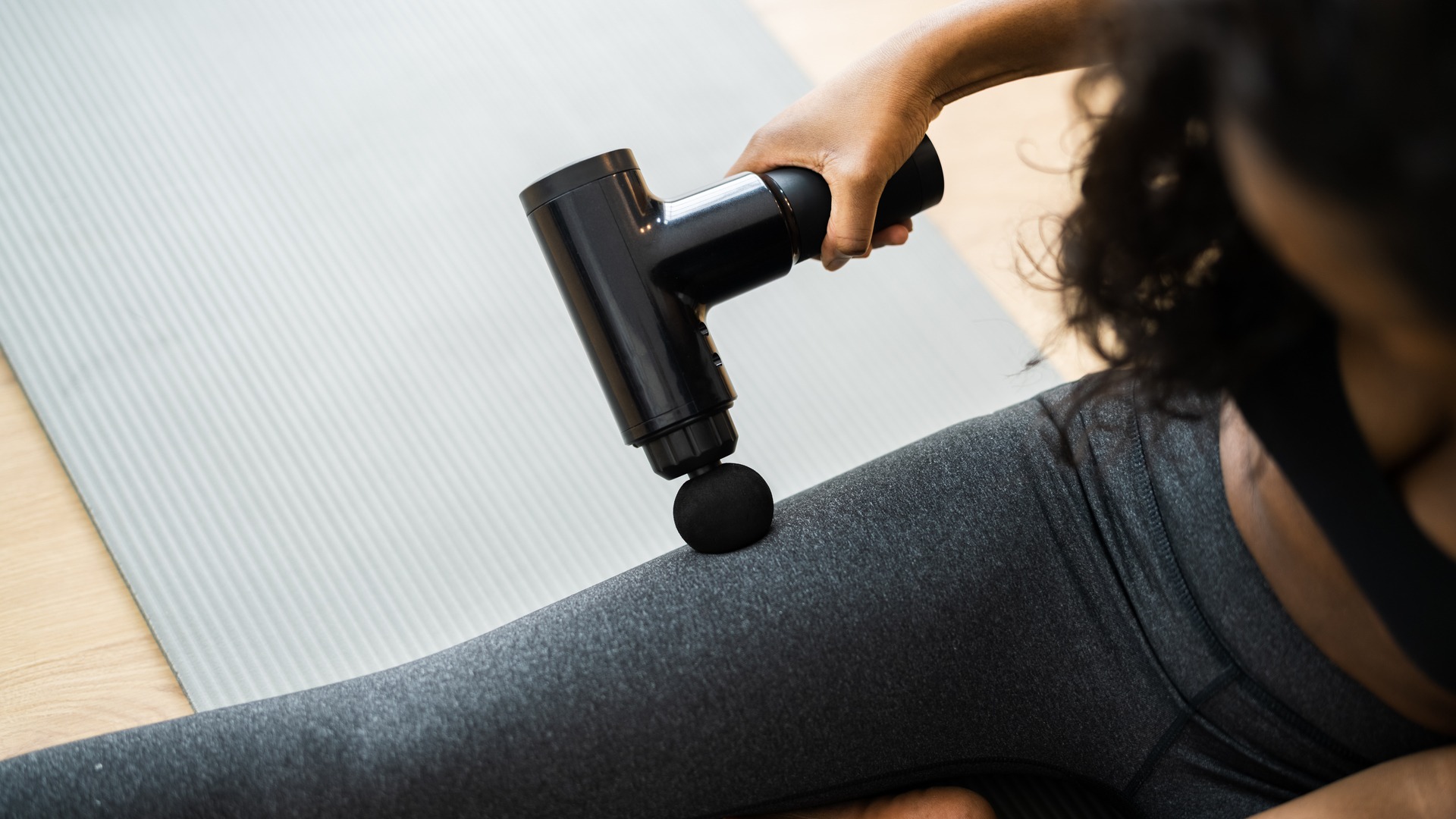
how to tell if you are recovered
The funny thing about fatigue, or being under-recovered, is that it doesn’t tend to happen suddenly. Of course, you might get some acute fatigue from a big ride or training session, but more often the chronic fatigue builds over a longer time period. The good news is that you can use how you feel when you are acutely fatigued as a measure to gauge if you become chronically fatigued.
Possibly the best advice you could take from reading this is to keep a diary of the following subjective measures. If you’re not already, start a mindfulness practice, such as daily meditation, to increase the chance of you actually becoming aware of these.
Here’s my list of top 5 ways on how to tell if you are recovered
- You are getting unusually grumpy, short-tempered, or have unusual low mood
- You are unusually hungry
- You’re not sleeping as well as normal
- Your athletic performance is lower than normal
- You get out of breath during normal activities (like climbing stairs)
You may have noticed that none of these are objective measures. This is partly because the next chapter covers some more objective ways, but also because you should really be able to tell when you’re under-recovered too. Of course, there’s no harm in having a helping hand or someone to remove the bias, but, like understanding pacing to feel, it is a skill which will be incredibly useful to you.

Objective ways to measure recovery
There are loads of really useful tools and apps that can help you quantify whether you are recovered or not. Wearables such as Apple Watch, Ouraring, and Whoop can start to look at many different patterns among some common objective recovery measurements.
Common objective recovery measurements
- Heart Rate Variability (HRV)
- Resting Heart Rate (RHR)
- Body weight
- Sleep quantity
- Sleep quality
There’s no doubt more we could list here too, but these might be the main ones. Note that sleep quality can be measured by device, as such I have included this in objective measurements, despite it being subjective too.
Limitations and challenges
While this data is very useful and can serve as an important guide, it has some considerable limitations and challenges.
The first, and possibly most obvious, is the use of heart rate for most of these measurements. We don’t really see too much training to heart rate anymore, certainly not with power meters becoming more affordable. This is mainly because of how easily heart rate can be influenced. Factors such as stress, caffeine, sleep, hydration, temperature, and many more can influence your heart rate.
Your heart rate may vary, quite dramatically, for many reasons. While we can look at the big picture of this, it can be very hard to get a truly accurate reflection of recovery from this. Couple this with taking the heart rate from a limb (either wrist, or hand/finger with our examples) and you have yourself one potentially unreliable source.
Similarly, we often avoid telling athletes to gauge weight loss based on one measurement and look at the bigger picture. Again, this is mainly down to how easy to influence one weight measurement can be. Factors such as what time you ate your last meal, your hydration level, the amount of glycogen in your body, and how much waste you still have in your body, can dramatically affect morning weight.
Are these devices really worth it then? If you are able to appreciate the challenges they face and you can afford the expense, then yes. However, it is still easy to take this information and create a confirmation bias – where you are simply searching for the answer or result you want to see. For example, you find the measurements that support the answer you want to see – like being recovered when you’re actually not.
How to tell if you are recovered by skipping the guesswork and removing all bias
Ironically enough, my answer on how to remove the bias you might have on these decisions, is potentially also biassed; work with a coach!
It’s often a reason why coaches are coached themselves; it is all too easy to make a decision based on emotion rather than logic.
Having said that, if your take-away from this blog post is to simply keep a diary of the subjective measures you can track on your own that I mentioned early, you are definitely on the right track.
Summary
Recovery is not about being perfect. It is about noticing the patterns that tell you when to push on, when to ease back and when your training needs adjusting. If you would like an outside view on your training and recovery decisions, Book a Free Consultation.
Further reading
If you’d like to dig a little deeper on how to tell if you are recovered, here are some links I used to write this article.
- Monitoring Training Adaptation and Recovery Status in Athletes Using Heart Rate Variability via Mobile Devices: A Narrative Review. Supports the explanation of HRV as a recovery metric and its day-to-day limitations.
- Accuracy of 11 Wearable, Nearable, and Airable Consumer Sleep Trackers: Prospective Multicenter Validation Study. Supports the distinction between device-derived sleep data and an athlete’s subjective sleep experience.