Last Updated on 17 September 2026:
Firstly, no, I’m not vegan and I have no objections to those who eat meat. But plant nutrition for cyclists matters: a wide variety of fruit and vegetables can help support the micronutrients needed for training, recovery and staying healthy. Here’s why eating more plants, and more colours, could be a smart move for your riding.
Covered in this blog
- What is micronutrition?
- The role micronutrition plays in athletic performance
- Why 5-a-day isn’t enough
- Why our fruit and vegetables are no longer nutrient dense
- The science showing loss of nutrients in our fruit and vegetables
- How to ensure you get enough nutrients from plants
- Why superfoods are bull
- Where the term superfoods came from
- The problem with superfoods
- Does fresh mean healthy?
What is micronutrition?
Micronutrition is the tiny minerals and vitamins that are, typically, found in plants. You will find them in meat too, but they tend to be only densely present in organ meat; liver and so on. Given the accessibility of fruit and vegetables (to most), having plants as the focal point of your nutrition is a smart move.
If you consider that your body is like a car. The petrol/gas you put in the car is the fuel, much like your body taking fuel from fats and carbs (sometimes protein). Your car also needs something crucial to run efficiently and not break down; oil. Micronutrients are the oil you put in your body. You can put the best quality fuel in your body, but without enough oil, your body will struggle, especially with recovery and staying healthy.
The role micronutrition plays in plant nutrition for cyclists
Published in the May 1999 issue of Nutrition Science News, Alan Christianson said:
“Athletes who participate in endurance sports—those that involve more than one hour of consistent activity—have specific needs [to consume more fruits and vegetables] because of what they demand from their bodies.”
Simply put, you need a large variety of micronutrients to ensure you recover from training and, therefore, perform well.
What 5-a-day isn’t enough
Something I’m passionate about – seriously, I don’t really stop talking about it (!) – is where we get our food from. Interestingly, some of the hardest places to get food are actually in urban areas. Of the 690,000,000 people worldwide (8.9% of the human population – 2018/19) who Action Against Hunger estimate go hungry every day, an unbelievable 23,500,000 U.S. residents live in “food deserts”. That’s 7.6% of the US population (2010) that live more than a mile from a store that sells fresh produce in urban or suburban areas and more than 10 miles from fresh produce in rural areas, according to the United States Department of Agriculture.
Something even more concerning is that, even if you have access to fresh produce, they might not actually be as good for you as they used to be…
Why our fruit and vegetables are no longer nutrient dense
The number one cause of lower densities in today’s fruit and vegetables? Crop rotation, or more specifically, lack of crop rotation.
“Crop rotation is the practice of planting different crops sequentially on the same plot of land to improve soil health, optimize nutrients in the soil, and combat pest and weed pressure.
For example, say a farmer has planted a field of corn. When the corn harvest is finished, he might plant beans, since corn consumes a lot of nitrogen and beans return nitrogen to the soil.
A simple rotation might involve two or three crops, and complex rotations might incorporate a dozen or more.” Rodale Institute.
Due to the high demand of certain produce, high selling price, and subsidies to grow them, certain crops are just repeatedly planted year after year. The challenge with this is that the soil becomes depleted of certain nutrients and pests start to thrive. To combat this, farmers have to use greater quantities of chemical fertilisers and pesticides. Despite that, some studies suggest we have seen an alarming decline in the nutrient density of our crops over the last half a century.
The science showing loss of nutrients in our fruit and vegetables
UK data from 1940 to 2019 show the greatest reductions in sodium (52%), iron (50%), copper (49%), and magnesium (10%), with all elements except phosphorus declining MAYER2021. An earlier UK comparison covering the 1930s to 1980s found statistically significant reductions in calcium, magnesium, copper, and sodium in vegetables, and in magnesium, iron, copper, and potassium in fruits MAYER1997.
US USDA data for 43 garden crops from 1950 to 1999 revealed median declines ranging from 6% for protein to 38% for riboflavin across six nutrients DAVIS2004. A broader review of UK and US studies reported apparent median declines of 5% to 40% or more in some minerals in groups of vegetables DAVIS2009.
Australian food composition databases from 1991 to 2022 show iron content decreased significantly for fruit (48%) and vegetables (20%), and zinc declined 15% for fruit JENKINS2024. Finnish data comparing the 1970s to 2000s found trace element density in vegetable foods decreased over three decades, with potassium significantly lower EKHOLM2007. Indian food composition tables from 1939 to 2017 noted thiamine, magnesium, and zinc declines of 41–56% in tomato, cabbage, and potato, and 60% less iron in apples TIWARI2017.
How to ensure you get enough nutrients from plants
Unfortunately, we tend to significantly underestimate the amount of plants we need to eat and there is a significant, albeit hard to scientifically prove, link between crop rotation and plant nutrition for cyclists.
First of all, forget “5-a-day” and just start eating a HUGE amount of plants. 5-a-day was introduced over two decades ago, when 5 would have possibly been enough – maybe not for athletes. As you can see from the studies I refer to above, you do need to eat big!!
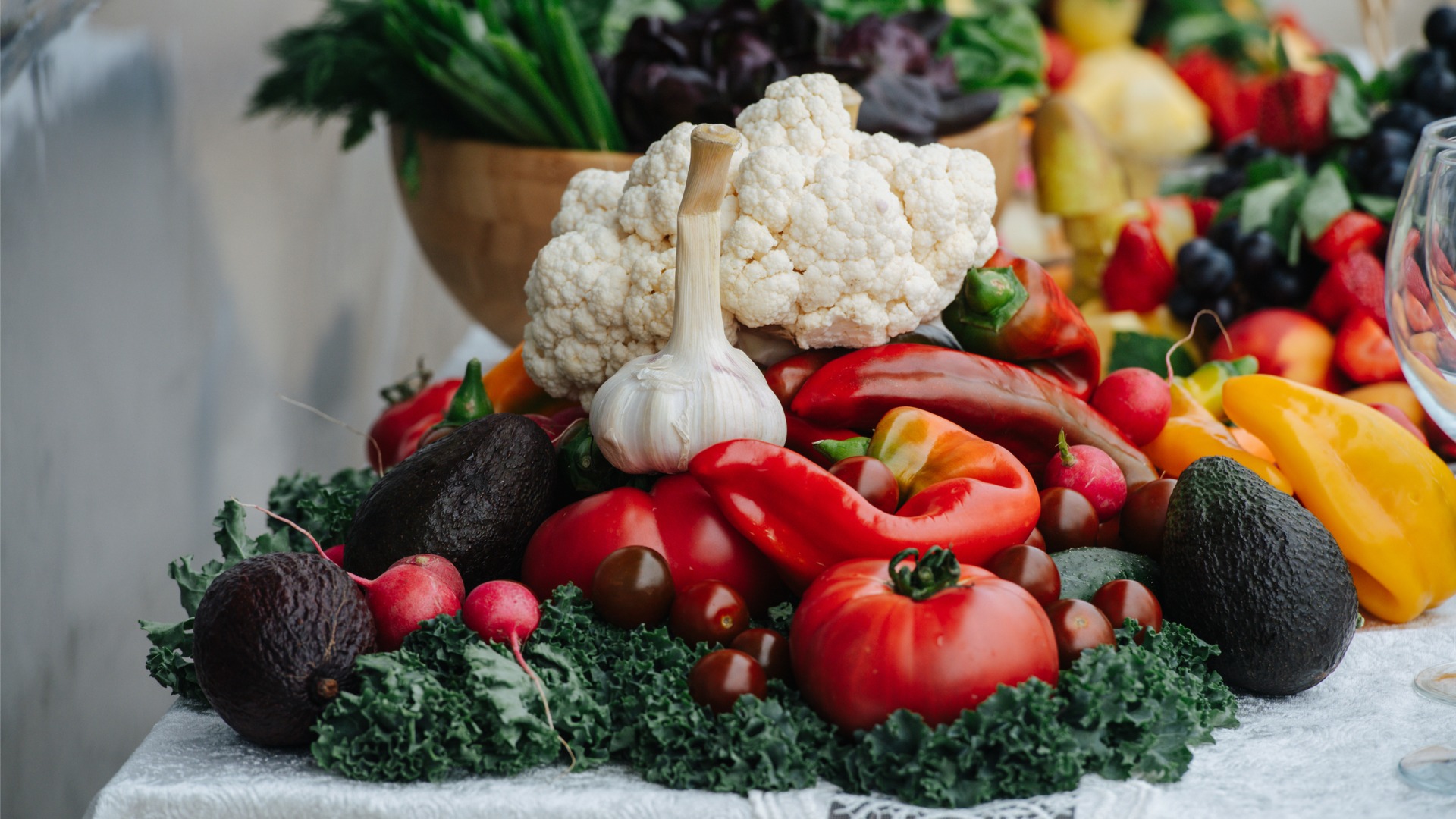
My advice to the athletes I coach is to aim for 5-a-meal, even if you fall a little short, you’ll have likely eaten enough. And, yes, that’s 5 portions of fruit or vegetables per meal. Given that a portion is the size of your fist, it might sound like a lot, but it’s not actually that bad. Try to mix up what you eat, and aim to eat the rainbow – that’s multiple colours that will ensure you get a good variety of micronutrients, and give your body the largest amount of vitamins, minerals, and phytochemicals.
Personally, I don’t always recommend chemical or man-made supplements (such as a multi-vitamin), very little evidence exists to show that, once you ingest them, they are present in your bloodstream, termed ‘bioavailable’. If you choose to supplement, try to find actual plant powders, and check how it is produced.
If you’re worried about this, a simple way to put a lot of fruit and vegetables into your system is to make a smoothie from frozen plants (veggies too!). Frozen produce has a longer shelf life and costs less too, especially if you buy in large amounts.
Still worried about how to get 5-a-meal? Here’s a ridiculously simple meal plan to ensure you eat enough plants:
- Breakfast: Smoothie with banana, kale, strawberries (one portion of each) + oats topped with blueberries and raspberries. That’s 5 already!
- Lunch: Large salad + whatever you want to add to it. Another 5!
- Dinner: Whatever you want + lots of veggies. Another 5!
It’s easy! Bonus points if you eat more because you train a lot or snack on plants too.
Why superfoods matter not when considering plant nutrition for cyclists
Where the term ‘superfood’ came from
Marketing… it’s just marketing…
Of course, scientific papers often refer to certain plants as superfoods, and this certainly doesn’t help the situation, but it’s still right out of the marketeers playbook. Don’t worry, I’m not disputing the awesome power of plants, what I’m concerned with is what this marketing tends to make us do.
The problem with superfoods
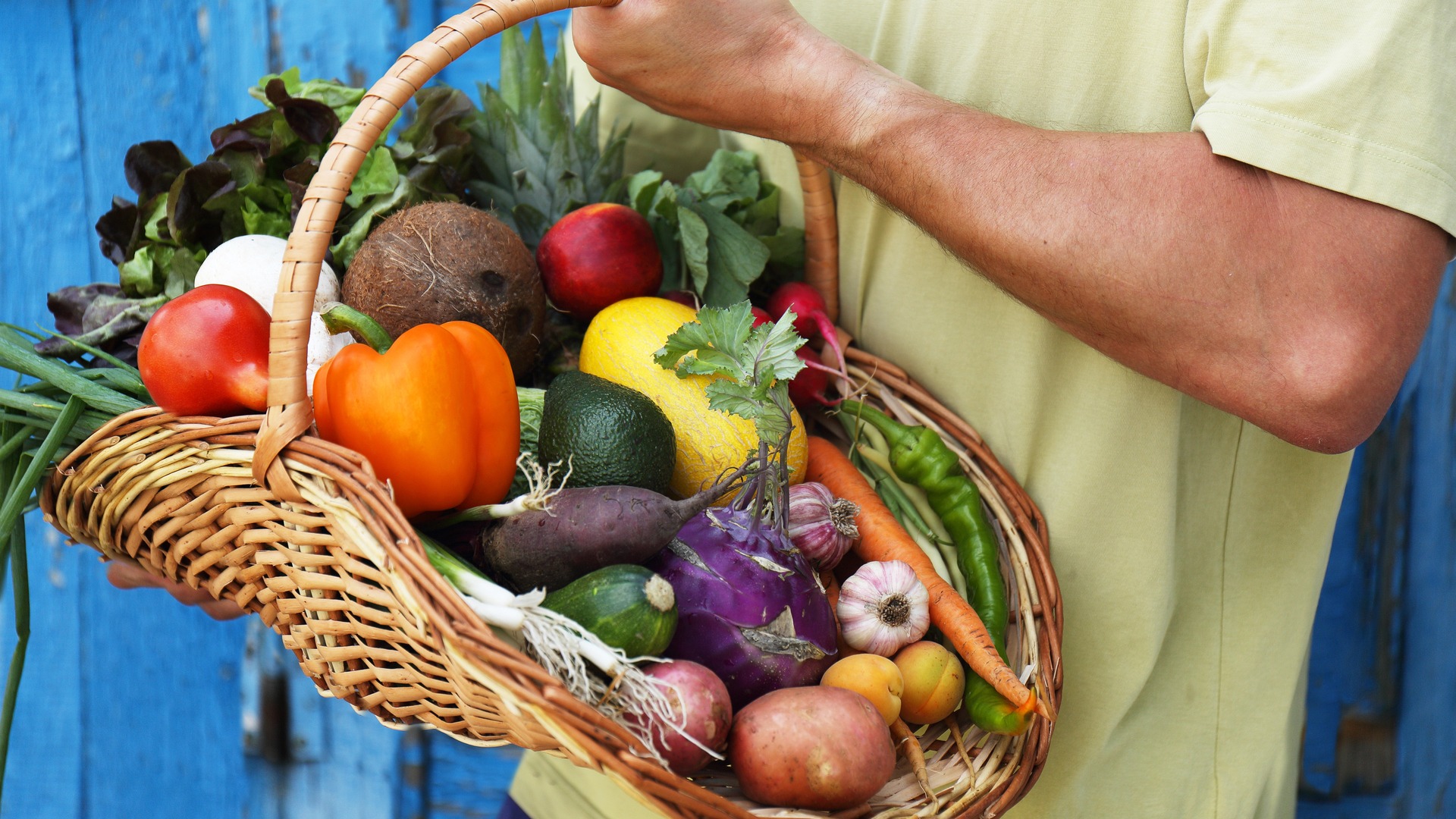
If someone eats more plants because they believe it will give them superpowers, great! The trouble is that it’s often something else that happens. Rather than us eating more plants, we actually eat the same overall quantity, just all of the same plant. When we consider that you need to eat a variety of plants to get a broad spectrum of micronutrients, you can see the problem that superfoods cause.
Now, I’m definitely not against anything that gets people to eat more fruits and vegetables, what I am against is getting people to eat one specific type; often neglecting others. That’s the reality, we only eat a certain amount of fruit and vegetables per day, fill up on ‘superfoods’ and miss out on others.
The key lesson here is to enjoy eating a wide variety of different plants. Just remember to ensure they are from the right place…

Does healthy mean healthy?
Sadly, not all products that are sold as fresh are actually fresh and, even when they are, it might not be as good for you as you’d think. Creative and colourful advertising from retailers has given us the false impression that what they are selling us is actually healthy.
The challenge retailers have is ensuring that the products they sell, actually get sold. In order to do that, the produce tends to need picking far too early to be fully formed and nutrient dense, loaded with chemicals, or stored in specific ways, to ensure it lasts long enough, and looks good enough, to be purchased. In order to help you get the best quality plants in your system, here are my recommendations for the best ways to get your fruits and vegetables:
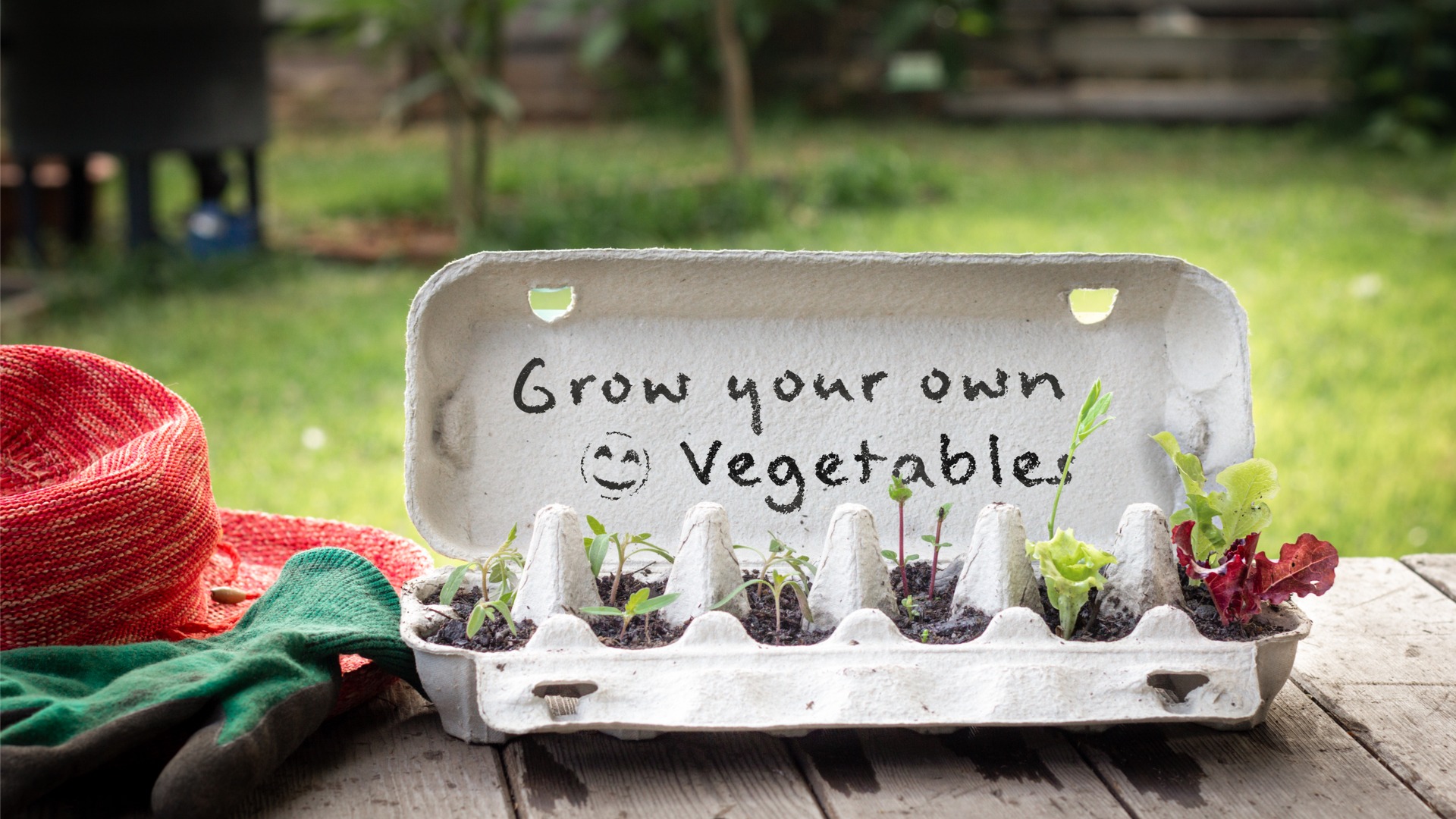
- Grow your own
- Buy local
- Buy seasonal
- Buy organic
Where to source your plants
Growing your own plants is easily the best way to ensure you are getting the highest quality, since you are controlling every aspect of the process, thus improving your plant nutrition as a cyclists. You cut out any time and delivery between harvesting and your plate, so you can pick them at the peak of ripeness, when the plant is most nutrient dense. You can eliminate any chemicals and you can have a lot of fun doing it! If you don’t have a yard, or enough space, consider hydroponics as a solution to get started.
Buying local, specifically at farmers markets, is the next best to growing your own plants. Here you’ll have reduced the time taken between harvesting and eating, by cutting out the middle-man. You’re also supporting local farmers. Don’t worry if it’s not organic, organic is more a marketing scheme than any real benefit over conventionally grown.
Buying seasonal would be next best; depending on where you live. Seasonal produce will at least, hopefully, have been grown locally – maybe not as local as your farmers market, but ideally in the stores locality. Consider how far plants have to travel when they’re grown overseas, then consider how the heck they maintain that good look, when most produce goes bad in your fridge within a week.
Summary
Don’t overcomplicate it: eat a bigger variety of plants, use fresh or frozen options that fit your budget, and make colourful fruit and veg a regular part of every meal. This is the basics of plant nutrition for cyclists, but if you want help making this work alongside your training, Book a Free Consultation.