Last Updated on 15 September 2026:
Having spent my entire life learning to live with the swings and roundabouts of Bipolar Affective Disorder, I know that balancing cycling training and mental health can require more than simply getting out for a ride. I have also spent a lifetime coaching people, including ten years coaching cycling, and I want to share practical ways to protect your wellbeing while continuing to train. Exercise can help, but the stress of structured training needs managing too.
Covered in this blog:
- Top ten tips for generally improving mental health
- The damage cycling training can do to mental health
- Top five tips to protect your mental health while training
- Top ten foods to improve mental health
Top ten tips for generally improving mental health
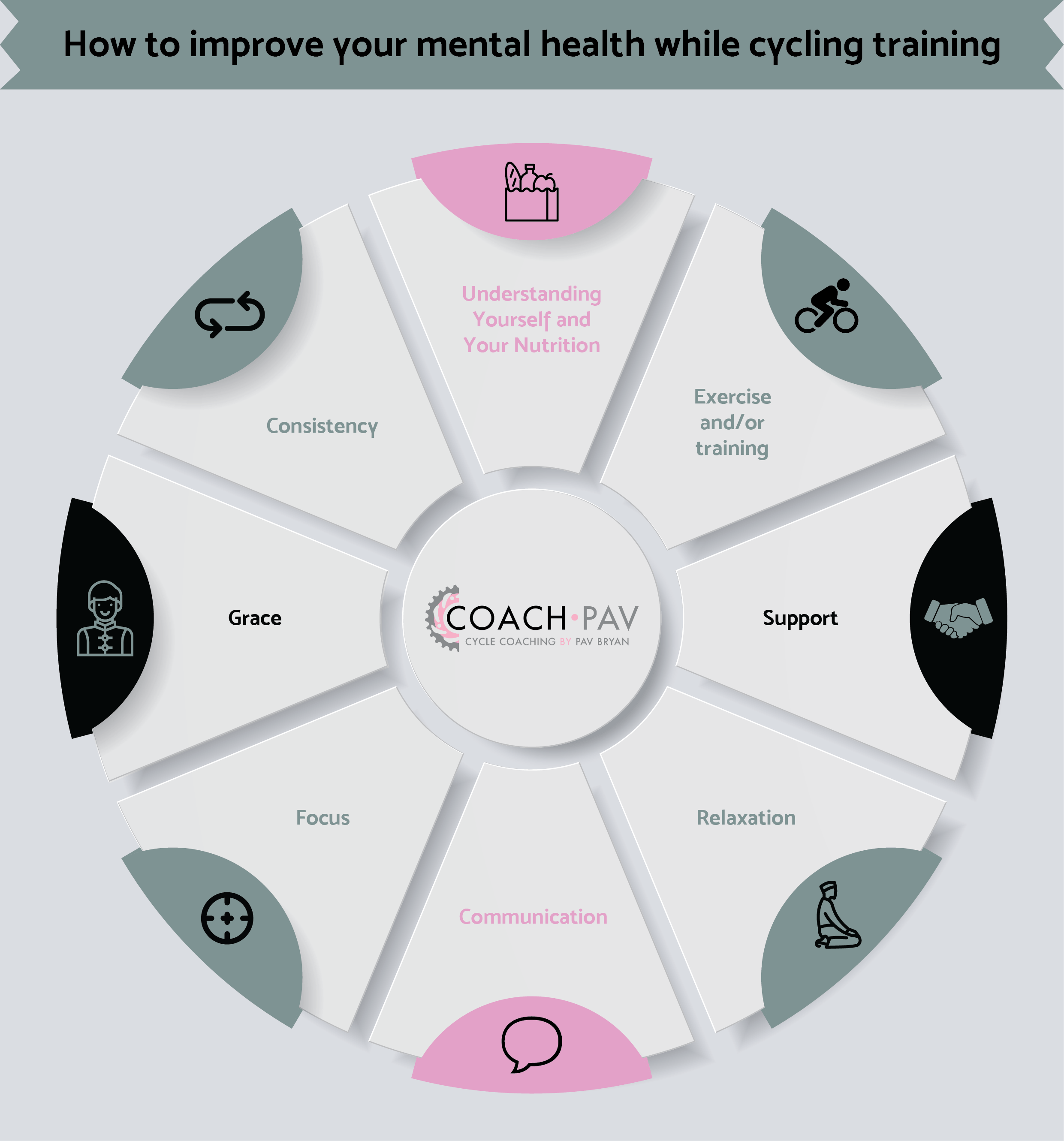
- Understanding -> understand that you are only human. We will all face challenges in our lives and these will almost certainly include mental ones. Accepting this fact is one of the most crucial and first steps to improving your mental health
- Nutrition -> good nutrition isn’t just for athletes. The healthier you eat, the healthier your mind. Fresh fruits and vegetables, clean cuts of lean meat, and healthy fats will improve your mental health as much as they will your body
- Exercise and/or training -> simply moving your body for at least thirty minutes per day will help improve your mental health and help you feel more alive. When you are training, you should consider how this might affect your mental health, as doing too much might cause as much mental fatigue (burnout) as it will physical fatigue
- Motivation -> find a reason to work on your mental health. This might include family, work, or training. Use methods such as visualisation, goal setting, and vision boards to keep yourself motivated
- Support -> accept the fact that you can’t do this alone. If you’re not ready to tell a loved one, then tell a stranger. Therapy and/or support groups will help reassure you that you’re not alone in this fight
- Relaxation -> ensure you find time in your day to relax. Meditation is great, check out the Headspace, Calm, or Balance app for guided meditation
- Communication -> this is a tough one, but you need to learn to communicate. If you can’t talk about your problems with loved ones then, again, a stranger is a good start. At a minimum, you could record yourself talking about your day, like a video journal or diary, and show it to someone
- Focus -> learn to focus and focus on the reason you are working on your mental health. Spend some time per day on this, even if it is just revisiting your goals, completing a gratitude practise, or chilling out for a bit
- Grace -> having grace with yourself when you have a bad day. If you have a bad day, just accept it, and move on without punishing yourself
- Consistency -> like most things I write about, consistency is key. You don’t have to be perfect, but even being half decent with them over a long period of time will be a life changer. Start by making small changes and going slow. Soon you’ll find that this is just another part of your normal routine

The damage cycling training can do to mental health
This might sound counterintuitive and even contradictory to most messages you hear about exercise and mental health and that’s just it – it’s the difference between exercising and training.
Top five tips to protect your mental health while training
Training is hard, not just physically, but mentally too. As with ensuring your body can cope with the stress training places it under, you should look to do the same with your mentality. Here’s my top five tips to protect your mental health while cycling training.
- Start with recognizing that training fatigue will affect your mind too. If you are going to push the limits of your body, you will need to be prepared to push the limits of your mind too. Training your brain, using the tips in the blog post, or reducing training stress, if you are susceptible to mental health problems, is a better move than quitting entirely later on when it gets too much. Less training is more than no training
- Focus on brain recovery too. This can be solo time doing an activity you enjoy (not training though!). Some people like hot salt baths, some people meditate frequently. Find something that works for you and make allowances in your day to get it done
- Eating the right foods is crucial to ensure your mind is protected from the training stress. Fresh produce, lean protein, and healthy fats rich in omega 3 are proven to help your mind work too
- Involve someone else. This might be your partner, a riding buddy, or even a coach. Someone who you can confide with, but someone who can also spot the warning signs when you’re mental health is flagging due to the training. Often we don’t notice our mental health slip until it’s too late, a fresh and unbiased set of eyes might though
- Consider your mental health while goal setting. Sometimes we can easily over-commit to a challenge. It’s better to start with something less and accurately gauging commitment, than to get started and realise later on it’s just too much

Top 10 foods for mental wellbeing
I’ve mentioned it several times throughout this blog post, but nutrition is a big part of positive mental health. Here are my all time top ten foods which might help improve your mental health.
- Fatty fish such as salmon, herring, sardines and mackerel provide the brain with healthy fats, including omega-3 fatty acids. These fats will help build brain cell membranes, reduce brain inflammation, and promote new brain cell formation
- Whole grains such as oats, wild rice, and beans provide your brain with a clean source of its preferred fuel; carbohydrates. Adequately fuelling will help your brain from getting tired; just as your body does
- Chicken fed on flax seeds (which is also a great source of omega-3) will improve your mood and memory and give you protection against brain disorders ranging from depression to dementia
- Lean meats such as more fish and turkey provide your body with protein which helps your brain produce enough neurotransmitters such as serotonin, which is one of the main chemicals which regulates our mood
- Your brain is made up of around 60% fat, hence the reason fat is mentioned repeatedly in this blog post. Other seeds such as chia, also provide healthy omega-3
- Leafy greens such as spinach and broccoli contain an amino acid called lutein, which may support cognitive function and brain health
- Berries reduce inflammation, which is a major cause in the development of depression, dementia and other brain disorders
- Bone broth might help heal your gut which in turn helps provide more nutrients to your brain. Treating conditions, such as leaky gut syndrome, which cause your gut challenges when absorbing, or even incorrectly managing, certain nutrients. This might allow more nutrients into your body from the foods you eat, in turn improving your mental health
- Avocados help with blood sugar regulation, which regulates mood. They also promote better blood flow to your brain, which will mean a higher functioning brain
- Drink enough water so you don’t become dehydrated. Adequate hydration will improve brain memory and function, thus increasing in energy and promoting a shift to a more positive mood
Summary
Training should support your life, not make it harder to manage. If you would like help building a cycling plan that considers your goals, recovery and wellbeing, Book a Free Consultation.