
Last Updated on 20 August 2026:
Cycling motivation is rarely constant. Even riders who genuinely love training go through periods where getting on the bike feels harder, progress seems slow, or life simply gets in the way.
That does not necessarily mean you have lost your passion for cycling. Motivation is influenced by your goals, fatigue, stress, mental health, training variety, social support and whether you feel that the work you are doing is actually taking you somewhere.
In this guide, I’ll look at what drives cycling motivation, why it can disappear, and practical strategies you can use to stay engaged with your training through both the good periods and the difficult ones.
Covered in this blog:
- Introduction to cycling motivation
- Understanding the cyclist’s mindset
- The psychology of endurance sports
- The role of mental health in cycling
- Setting and achieving goals
- SMART goals in cycling
- Celebrating small wins
- The science of motivation
- Intrinsic vs. extrinsic motivation
- The role of dopamine
- Overcoming common obstacles
- Dealing with burnout
- Coping with injuries
- Community and social support
- The power of group rides
- Online communities and motivation
- The role of coaching
- Personalised training plans
- Mental health and coaching
- Conclusion, top tips, and additional resources
Introduction to cycling motivation
Cycling, particularly at the ultra-endurance level, is as much a mental challenge as it is a physical one. The motivation behind each pedal stroke is a complex blend of personal goals, mental resilience, and the pure joy of riding. Cyclists often find themselves battling not just the physical strain but also mental hurdles. Understanding the dynamics of motivation in this context is not just beneficial; it’s essential for any cyclist looking to improve, whether in competitive races or personal endeavours.

Understanding cycling motivation
The psychology of endurance sports
Endurance sports like cycling require a distinct psychological composition. Mental toughness, resilience, and a high level of self-discipline are key traits of successful endurance athletes. A study in the Journal of Applied Sport Psychology (Smith, 2019) discusses these traits in detail, highlighting the importance of psychological preparedness in endurance sports. The ability to endure pain, overcome fatigue, and maintain focus over extended periods is what sets apart successful endurance athletes.
The role of mental health in cycling
The connection between mental health and cycling is profound. Activities like cycling have been shown to significantly impact mental health, offering a sense of achievement, stress relief, and an effective way to combat anxiety and depression. A study published in Sports Medicine (Peluso & Andrade, 2005) emphasises that regular physical activity, including cycling, can improve mental health by reducing symptoms of depression and anxiety. The sense of accomplishment after a long ride, the clarity of mind during a solo journey, and the euphoria of overcoming a challenging climb are all aspects that positively influence mental well-being.
Setting and achieving goals
SMART goals and cycling motivation
Goal setting in cycling is not just about aiming high; it’s about setting SMART (Specific, Measurable, Achievable, Relevant, and Time-bound) goals. This approach, as discussed by Locke and Latham (2002) in American Psychologist, helps in breaking down larger, often overwhelming objectives into manageable and achievable milestones. For cyclists, this could mean setting specific time or distance goals for a season, aiming to improve certain technical skills, or targeting specific races or events.
Celebrating small wins
The path to achieving big cycling goals is paved with numerous small victories. Celebrating these small wins is crucial for maintaining motivation. This practice, according to Berridge & Kringelbach (2015) in Current Opinion in Behavioral Sciences, triggers the release of dopamine in the brain, creating feelings of pleasure and satisfaction. For a cyclist, this could be as simple as achieving a personal best on a familiar route, mastering a new technique, or completing a particularly challenging workout.
The science of cycling motivation
Intrinsic vs. extrinsic motivation
Understanding the difference between intrinsic and extrinsic motivation is critical for cyclists. Intrinsic motivation comes from within, driven by personal satisfaction and passion for cycling itself. Extrinsic motivation, on the other hand, is driven by external rewards like trophies, rankings, or social recognition. According to Ryan and Deci (2000) in Contemporary Educational Psychology, intrinsic motivation is often more sustainable and fulfilling in the long run. Cultivating a love for the ride itself, rather than just the results, can lead to a more enduring and satisfying cycling career.
The role of dopamine
Dopamine, a key neurotransmitter in the brain’s reward system, plays a significant role in motivation. Regular physical activity, such as cycling, can increase dopamine levels, enhancing the sense of reward and motivation. Lin & Kuo (2013) in the Journal of Biomedical Science discuss how dopamine not only contributes to better mood and motivation but also improves focus and cognitive function, essential for endurance sports like cycling.
Overcoming common obstacles
Dealing with burnout
Burnout is a common challenge in endurance sports, characterised by physical and mental exhaustion. It’s crucial to balance intense training with adequate rest and recovery. Research by Meeusen et al. (2013) in the British Journal of Sports Medicine highlights the importance of recognising the signs of overtraining and implementing strategies to prevent burnout, such as periodised coaching plans, adequate nutrition, and psychological support.
Coping with injuries
Injuries can be demoralising and are often a major setback for cyclists. It’s important to adopt a positive mindset during injury recovery. Research by Podlog & Eklund (2007) in the Journal of Applied Sport Psychology emphasises the psychological aspects of injury recovery, suggesting that maintaining a positive outlook, setting recovery goals, and staying engaged with the cycling community can help maintain motivation during these challenging periods.
Community and social support
The power of group rides
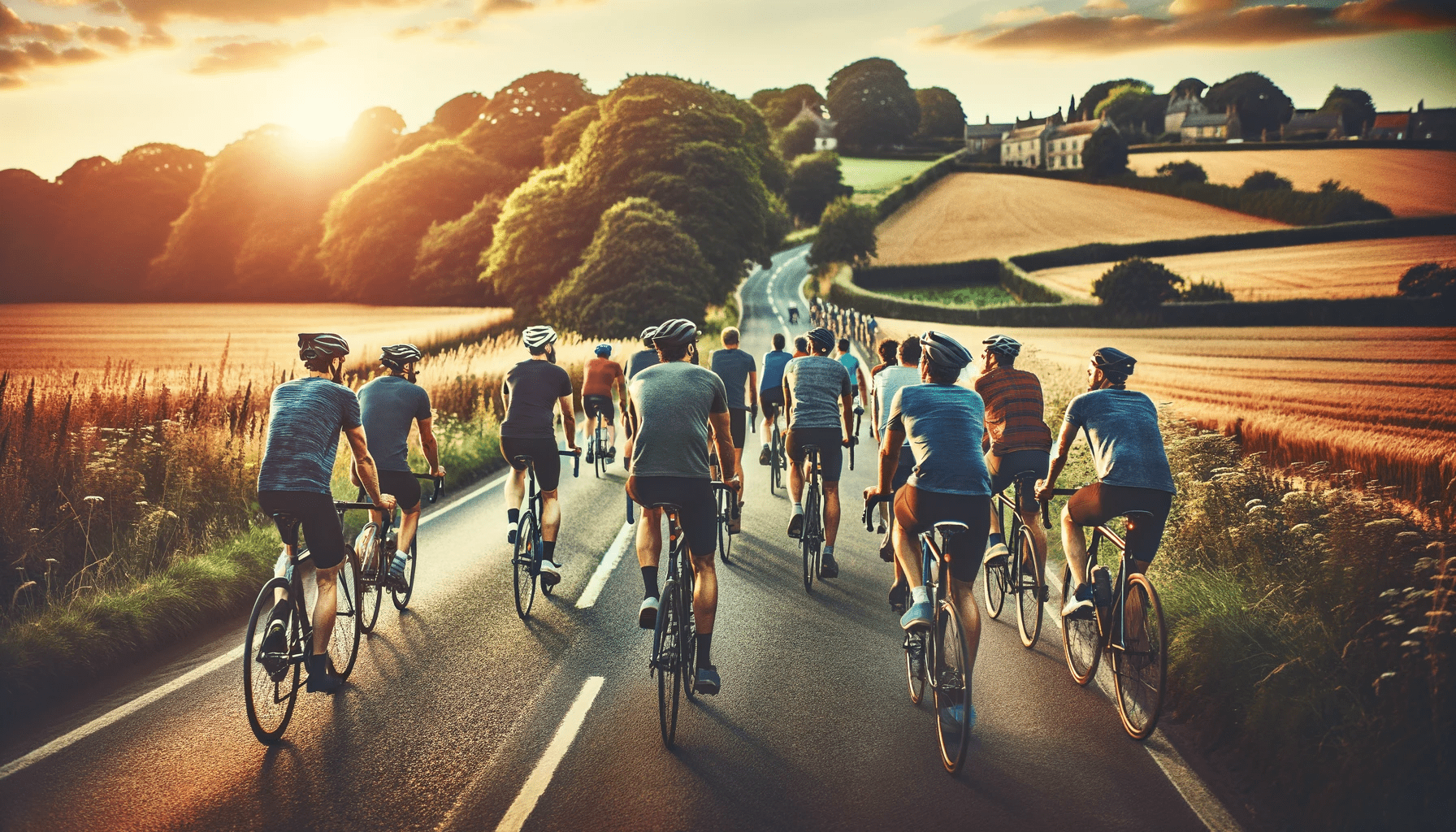
Group rides offer more than just physical benefits; they provide social support, motivation, and a sense of community. Participating in group rides can offer a motivational boost, a sense of belonging, and an opportunity to learn from more experienced riders. Stevens (2018) in the International Journal of Environmental Research and Public Health discusses the social and psychological benefits of group exercise, emphasising how it can improve motivation and adherence to a fitness regime.
Online communities and motivation
In today’s digital age, online cycling communities and platforms like Strava play a significant role in motivating cyclists. These platforms provide virtual challenges, social interaction, and a space to share achievements and receive encouragement. The Strava Report (2021) highlights how these online communities can foster a sense of belonging and provide additional motivation through virtual competitions and shared experiences.

The role of coaching
Personalised coaching plans
A coach can provide invaluable support by creating personalised coaching plans that cater to the individual needs and goals of a cyclist. As discussed by Jones (2007) in The Sport Psychologist, personalised plans can keep training both physically and mentally stimulating, ensuring variety and challenge, and thus maintaining motivation.
Mental health and coaching
Coaches also play a pivotal role in addressing the mental health aspects of cycling. They provide support and strategies to cope with the stress and anxiety related to performance. As Armstrong and Bull (2006) in Sports Coach point out, a coach’s role extends beyond just physical training; they are often crucial in helping athletes develop mental resilience and a positive mindset.
Summary
Maintaining cycling motivation is not about feeling excited to train every single day. There will always be sessions you would rather skip, periods where progress feels slow and times when work, family or stress make cycling less of a priority.
The key is to create enough structure around your training that you are not relying on motivation alone. Clear goals, variety, realistic expectations, social support and recognising when you genuinely need recovery can all help you stay consistent over the long term.
A personalised training plan can also help by giving each session a purpose and adapting your training when life changes, rather than leaving you feeling that you have failed because you could not follow a rigid plan.
If you would like help creating a cycling plan that keeps you progressing while fitting around the rest of your life, book a free consultation.
Top tips for maintaining cycling motivation
- Embrace your cycling ‘Why’:
- Reflect on why you started cycling. Whether it’s for fitness, competition, or the love of nature, keeping your core motivation in mind can fuel your passion.
- Set SMART goals:
- Use Specific, Measurable, Achievable, Relevant, and Time-bound goals to keep your training focused and exciting.
- Celebrate small victories:
- Acknowledge and celebrate every small win, whether it’s beating a personal best, mastering a new skill, or completing a challenging ride.
- Find your cycling community:
- Join local cycling clubs or online groups. The camaraderie and shared experiences can be a huge motivational boost.
- Incorporate variety in training:
- Mix up your training routes, intensity, and types of cycling to keep things interesting and challenging.
- Listen to your body:
- Pay attention to signs of fatigue and burnout. Balance intense training with adequate rest and recovery.
- Learn from setbacks:
- Instead of getting discouraged by setbacks, use them as learning opportunities to come back stronger.
- Visualise success:
- Practice visualization techniques, imagining yourself achieving your goals and overcoming challenges.
- Engage with a coach:
- A coach can provide personalised guidance, coaching plans, and the motivation you need to improve.
- Stay informed and inspired:
- Read books, blogs, and watch documentaries about cycling. Learning about others’ successes can be a great source of inspiration.
- Track your progress:
- Use apps or a cycling diary to track your progress. Seeing how far you’ve come can be a powerful motivator.
- Focus on the joy of cycling:
- Remember to enjoy the ride. The joy of cycling itself can be the best motivator.
Additional resources
For further insights and strategies, check out my book “The Guide to Truly Effective Cycling“. This book offers an in-depth look at both the physical and mental aspects of cycling performance, making it an essential read for anyone looking to improve their cycling journey.