
Last Updated on 14 September 2026:
Generic cycling training plans are convenient, and you may even have bought one of mine, but their one-size-fits-all approach rarely reflects your fitness, goals, recovery or life beyond the bike. They can provide structure, yet they often rely on assumptions that fail to account for how you are actually responding to training. AI offers a more adaptive alternative for non-coached cyclists, using data and feedback to make the plan more personal.
Covered in this blog
- The Shortcomings of Generic Training Plans
- Lack of Personalisation
- The Risk of Plateaus
- Impact on Mental Health
- Enter AI: A Paradigm Shift
- Data-Driven Personalisation
- Dynamic Adaptability
- Total Health Integration
- The Future is Already Here
- Summary
- References

The Shortcomings of Generic Cycling Training Plans
Lack of Personalisation
The glaring issue with generic plans is their one-size-fits-all nature. These plans are made for the ‘average’ cyclist, which essentially means they’re suitable for no one in particular. This lack of customisation neglects the individual nuances that are crucial for effective training. As a study by the International Journal of Sports Physiology and Performance points out, personalisation in endurance training leads to more optimised results (Jones et al., 2017).
The Risk of Plateaus
Generic plans consider progression or adaptation linearly and based on best assumptions, putting you at risk of hitting a plateau. A study in the Journal of Strength and Conditioning Research emphasises that training programs need to be periodised and adjusted to avoid plateaus and to induce athletic improvements (Rhea et al., 2003).
Impact on Mental Health
Subscribing to a plan not tailored for you can lead to a dead-end, affecting your mental state. Given that mental health is as critical as physical fitness in sports, this is a huge downside. Psychology of Sport and Exercise journal suggests that psychological well-being plays a key role in endurance performance (Lane et al., 2016).

Enter AI: The Death of Generic Cycling Training Plans
Data-Driven Personalisation
One of the cornerstones of AI is data analytics. Algorithms can analyze an exhaustive range of metrics, from VO2 max to lactate threshold, to build a plan that aligns with your specific physiology and goals. The adaptability of AI makes it akin to a digital extension of coaches who use evidence-based methodologies to devise personalised plans.
Dynamic Adaptability
AI’s capacity for machine learning enables it to adapt your plan based on performance and feedback continually. This dynamic nature is similar to what a study in the Sports Medicine journal describes as “auto-regulatory progressive resistance exercise,” an adaptive form of training that’s been found to be superior to fixed plans (Mann et al., 2010).
Total Health Integration
With smart wearables and biometric sensors, AI not only looks at your cycling performance but also incorporates data on sleep patterns, stress levels, and other lifestyle factors to create a 360-degree training strategy. This aligns with emerging research on how lifestyle factors impact athletic performance.
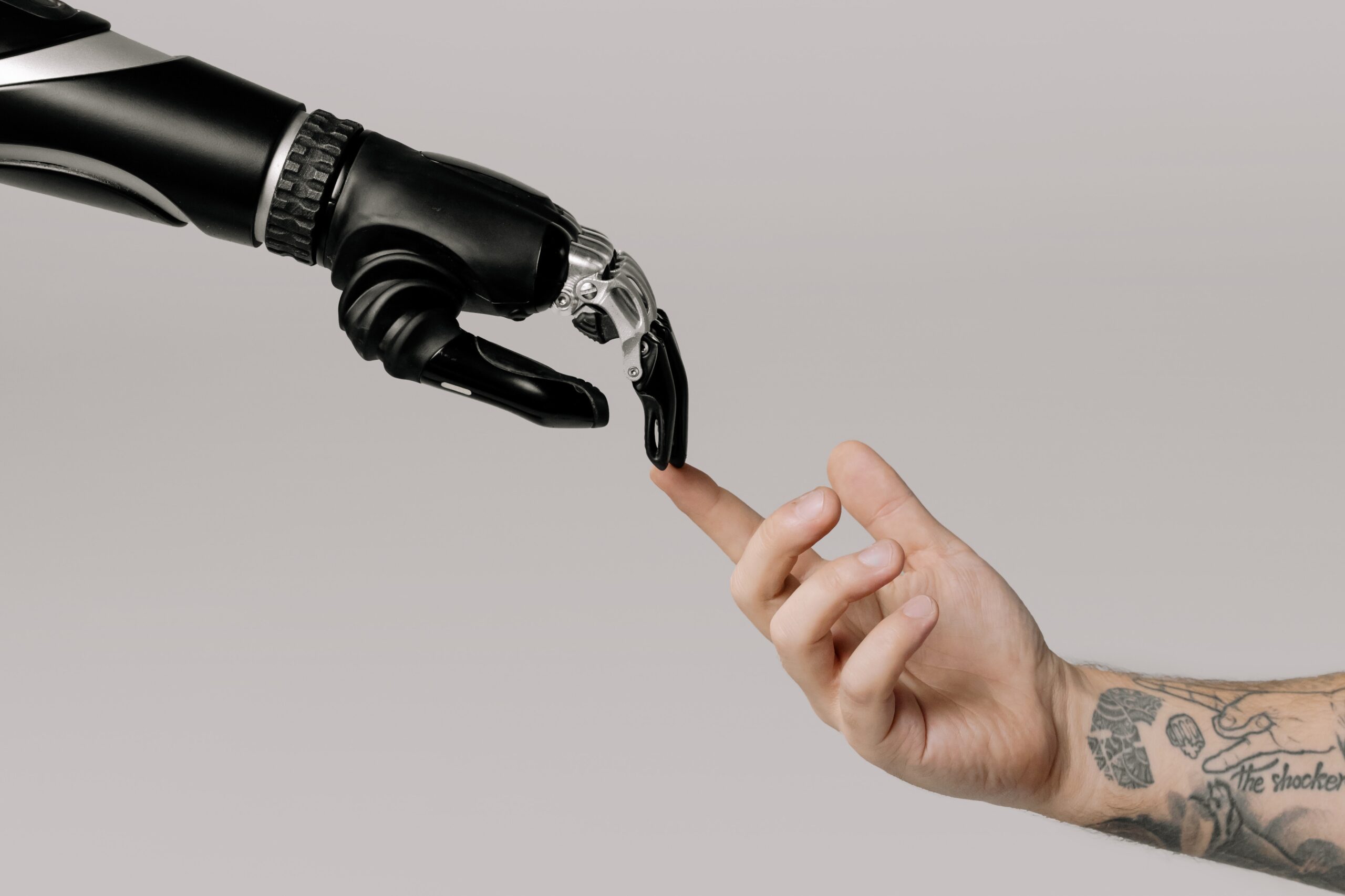
The Future is Already Here (and generic cycling training plans are not it!)
AI still has a long way to go before it can fully emulate the expertise of a seasoned coach, but it’s undeniably bridging the gap for non-coached cyclists. Advanced algorithms can even predict future performance metrics based on current trends, creating a predictive model for your cycling journey.
Summary
The obituary for generic training plans is being written as we speak. AI is not just a tech fad; it’s fundamentally changing how non-coached cyclists prepare for the road ahead. It promises a future where training is not just smarter but also more empathetic, treating you as the unique athlete you are.
Both generic and AI driven training plans can still offer a useful starting point, but better training comes from adjusting the work to your fitness, recovery and real life. If you would like help choosing an approach that suits your cycling goals, Book a Free Consultation.
Further reading
- Jones, A.M., et al. “Training Intensity, Volume, and Recovery Distribution Among Elite and Recreational Endurance Athletes.” International Journal of Sports Physiology and Performance, 2017.
- Rhea, M.R., et al. “A Comparison of Linear and Daily Undulating Periodized Programs with Equated Volume and Intensity for Strength.” Journal of Strength and Conditioning Research, 2003.
- Lane, A.M., et al. “Mood and Performance Relationships Among Highly Trained Athletes: Extending Lane and Terry’s Conceptual Model.” Psychology of Sport and Exercise, 2016.
- Mann, J.B., et al. “The Effect of Autoregulatory Progressive Resistance Exercise vs. Linear Periodization on Strength Improvement in College Athletes.” Sports Medicine, 2010.