Last Updated on 20 August 2026:
Core strength for cyclists is about far more than having visible abs or being able to hold a plank for several minutes. Your core provides the stable platform that helps you maintain position, transfer force through the pedals and stay efficient as fatigue builds.
That matters whether you are preparing for a Gran Fondo, riding a time trial or spending long hours in the saddle during an ultra-endurance event. A stronger and more stable core can help support posture, control and consistency on the bike.
In this guide, I’ll explain why core strength matters for cycling, how the core contributes to stability and pedalling mechanics, and which exercises can be useful when building core strength into your wider training programme.
Covered in this blog:
- Introduction
- Understanding core strength
- Definition and importance
- Core muscles and cycling mechanics
- Scientific evidence on core strength and cycling
- Study insights
- Impact on performance
- Core strength training for cyclists
- Recommended exercises
- Training frequency and duration
- Conclusion
- References
Understanding core strength for cyclists
Definition and importance of core strength for cyclists
At the heart of every cyclist’s performance is core strength, a term that extends far beyond the superficial muscles to encompass a complex network of stabilisers and movers. The core is your body’s powerhouse; it stabilises your spine, pelvis, and shoulder girdle to create a solid base of support. This support is crucial for generating powerful, efficient pedal strokes and maintaining optimal body alignment over extended periods on the bike.
Understanding the importance of core strength requires a deep dive into the physiology and biomechanics of cycling. As cyclists, we often focus on leg strength and endurance, overlooking the silent work the core does in maintaining stability and alignment. This oversight can lead to energy leaks, inefficient power transfer, and, over time, injury. The core’s role in ensuring every pedal stroke is as effective as possible cannot be overstated.
Core muscles and cycling mechanics
The core muscles include the rectus abdominis, obliques, transversus abdominis, erector spinae, and the deeper muscles such as the multifidus and pelvic floor muscles. These muscles work in concert to maintain pelvic stability, support the spine, and facilitate the transfer of power from the lower body to the upper body and vice versa.
In cycling, the core acts as a bridge between the push and pull of leg muscles. A strong core allows for a smoother transfer of power to the pedals, minimising wasted energy and maximising forward momentum. Moreover, a well-conditioned core helps maintain optimal positioning on the bike, reducing drag and improving aerodynamics.

Scientific evidence on core strength for cyclists
Study insights
Scientific research underscores the significance of core strength for cyclists. Studies demonstrated that cyclists with a structured core training program showed a marked improvement in performance over those who do nothing, attributed to enhanced power output and reduced fatigue. These findings are complemented by biomechanical analyses revealing that core stability directly impacts pedalling efficiency and overall cycling mechanics.
Impact on performance
Delving deeper, the science reveals that core strength influences not just performance but also cyclists’ resilience against injury. A robust core distributes the stresses of cycling more evenly across the body, safeguarding against lower back pain, one of the most common complaints among cyclists. Furthermore, core strength plays a pivotal role in the fine-tuning of balance and coordination, essential skills for navigating technical terrains and maintaining control at high speeds.
Core strength training for cyclists
Recommended exercises
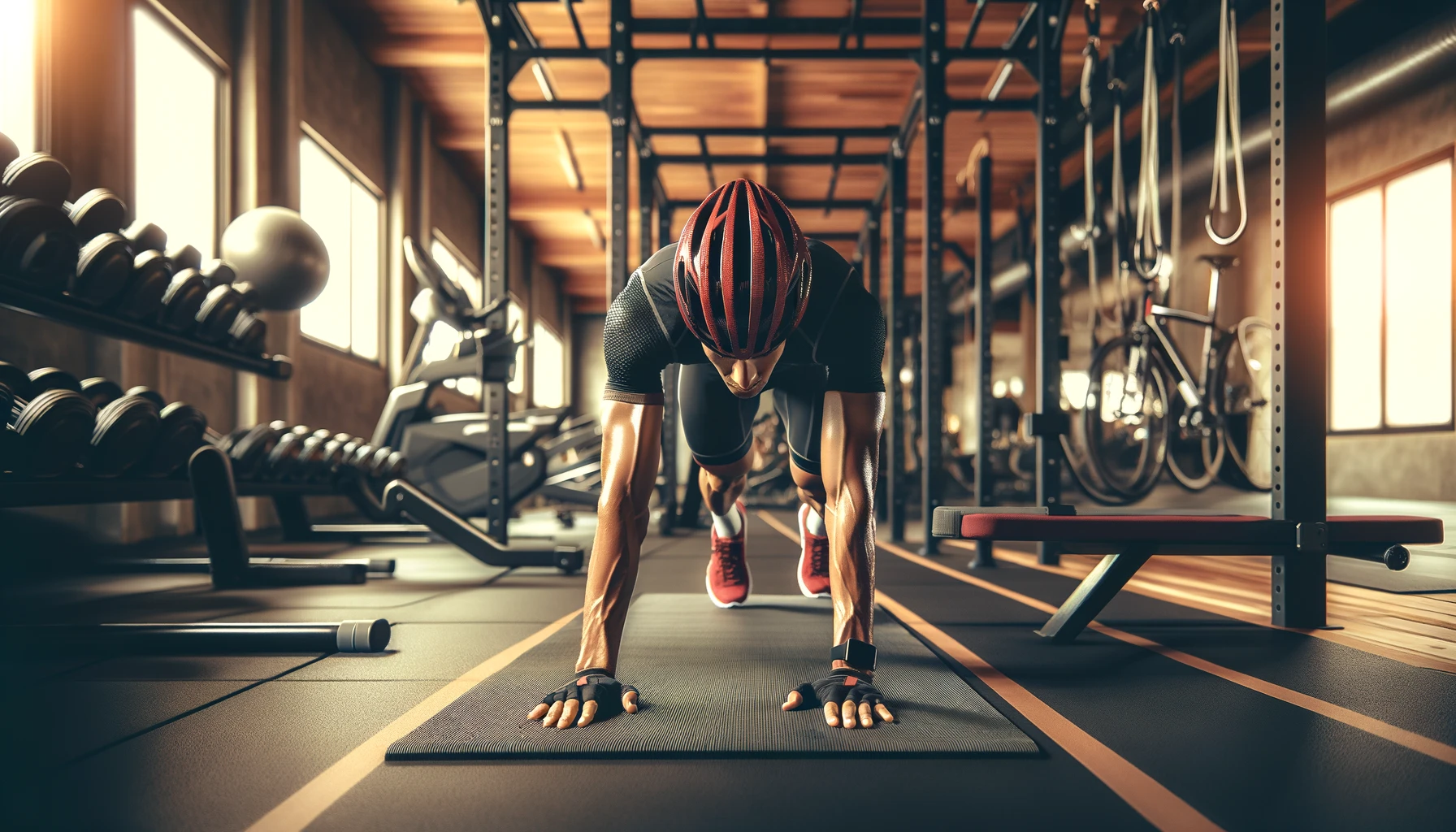
Building a comprehensive core training routine involves more than the traditional crunches or sit-ups. Cyclists benefit from a mix of dynamic and static exercises that mimic the sport’s demands. Planks, side planks, leg raises, Russian twists, and pilates exercises like the ‘bicycle’ are foundational movements. Additionally, incorporating stability tools such as Swiss balls and resistance bands can further enhance core engagement and strength.
Training frequency and duration
To reap the benefits of core training, consistency is key. A balanced approach would involve integrating core exercises into your training regimen 3-4 times per week, with each session lasting about 20-30 minutes. This frequency ensures that the core muscles are adequately stimulated to grow stronger without being overworked.
Summary
Core strength for cyclists should support what you do on the bike rather than become a training goal in isolation. The aim is to develop enough strength and stability to maintain a good riding position, control movement and continue producing effective pedal strokes as fatigue increases.
You also do not need hours of core work every week. A small amount of consistent, well-chosen strength training can fit alongside your cycling without taking away from the sessions that matter most.
If you would like help integrating strength and core work into a personalised cycling plan without compromising your riding, book a free consultation.
References
Core Stability Training for Injury Prevention – Kellie C. Huxel Bliven, PhD, AT and Barton E. Anderson, MS, ATC, AT
Strength Training Versus Core Exercises for the Optimization of Road Cycling Performance – Sebastian Sitko, Isaac López, & Rafel Cirer-Sastre
Relationship Between Cycling Mechanics and Core Stability – John Abt, James M Smoliga, Matthew J. Brick, & John T Jolly