
Last Updated on 18 September 2026:
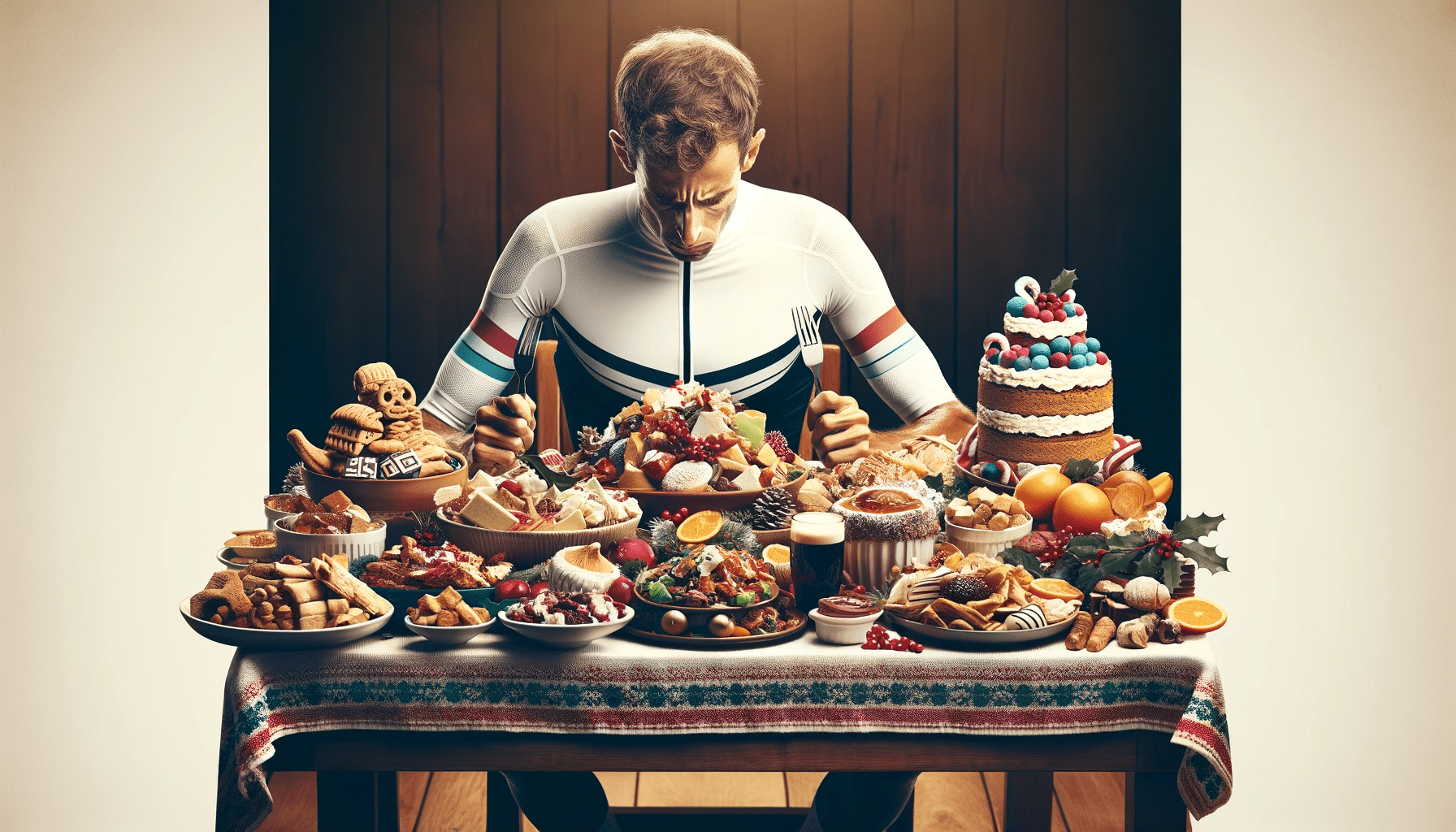
The festive season can create a tug-of-war between enjoying favourite foods and keeping your training on track. The good news is that holiday training balance does not require rigid restriction or skipping the celebrations. With a few practical adjustments, you can enjoy the occasion while maintaining the habits that support your fitness.
The holiday training balance
Research indicates that completely restricting yourself from holiday indulgences can lead to psychological stress, which isn’t beneficial for your overall well-being or training performance. A study published in the Journal of Sport and Health Science reveals that psychological stress can negatively impact physical performance and recovery (Smith, 2017). Hence, allowing yourself some leeway during the holidays can be more beneficial than sticking to a stringent regimen.

Effective Strategies for the Holiday Training Balance
- Moderation is key: Enjoy your favourite holiday foods, but in moderation. This doesn’t mean you should overindulge, but rather savor smaller portions. A paper from the American Journal of Clinical Nutrition suggests that moderate indulgence does not significantly impact body composition in athletes (Jones, 2019).
- Stay active: Incorporate fun, physical activities into your holiday routine. Think of a family hike, a playful snowball fight, or a brisk walk. These activities keep you moving and can be a delightful break from your usual training routine.
- Mindful eating: Practice mindful eating during holiday feasts. Pay attention to your hunger cues and fullness. A study in Appetite journal found that mindful eating helps in maintaining a healthy relationship with food, reducing the likelihood of overeating (Taylor & Holscher, 2016).
- Strategic training schedule: Adjust your training schedule around the holiday festivities. Shorten your training sessions if needed, but maintain consistency. Research in the International Journal of Sports Physiology and Performance suggests that shorter, more consistent training sessions can prevent performance decline during temporary breaks from intensive training (Clark, 2018).
- Hydration and sleep: Don’t forget the basics – staying hydrated and ensuring adequate sleep are crucial. These elements significantly impact training performance and recovery, as highlighted in a study from the European Journal of Sport Science (Foster, 2020).
The Psychological Benefits of a Break
Allowing yourself a break during the holidays is not just about indulging in food; it’s also about giving your mind and body a well-deserved rest. This can lead to improved motivation and mental health, as indicated by research in the Journal of Applied Sport Psychology (Green, 2019). A short break can rejuvenate your passion for training and help you return with renewed vigour.
Navigating Social Gatherings
Social gatherings are an integral part of the holiday season. Here’s how to navigate them without derailing your training goals:
- Choose Wisely: When faced with a variety of food options, choose healthier alternatives first. Fill your plate with veggies and lean proteins, and then add smaller portions of more indulgent items.
- Avoid Peer Pressure: It’s okay to say no when offered extra helpings. Politely declining is a skill that can be beneficial in maintaining your dietary balance.
- Alcohol in Moderation: If you choose to drink, do so in moderation. Alcohol can affect your hydration levels and recovery, so it’s best to limit intake.
Summary
Enjoy the celebrations, keep the basics of movement, hydration and sleep in place, and return to your usual routine without guilt. If you would like a training plan that works around your real life and goals, Book a Free Consultation.
Further reading
If you’d like to read more on the holiday training balance, here are some links that helped me write this article.
- Monitoring stress and recovery states: Structural and external stages of the short version of the RESTQ sport in elite swimmers before championships.
- Food for the Mind: A systematic review of mindful and intuitive eating approaches for mental health & wellbeing.
- Alcohol, Athletic Performance and Recovery.
- American College of Sports Medicine position stand. Exercise and fluid replacement.