Last Updated on 17 September 2026:
If weight loss has felt like a relentless battle, you are not alone. For endurance athletes, weight loss for cyclists is rarely as simple as eating less and training more. This article looks at the stress, habits and expectations that can make lasting change far harder than it needs to be.
Covered in this blog
- The difficult truth
- When calories are the cause, but not the cure
- You care too much about losing weight
- Top tips for caring less
- Set point theory
- Counting calories
- Eating “healthy”
- Summary
The difficult truth of weight loss for cyclists
The Center for Disease Control and Prevention provides some concerning stats:
“The prevalence of obesity was 40.0% among young adults aged 20 to 39 years, 44.8% among middle-aged adults aged 40 to 59 years, and 42.8% among adults aged 60 and older.”
That said, you’re ahead of the curve and have already taken several strong steps in your journey – you are already taking the first stand in the war against the scales. You are some form of endurance athlete and you are, in some way, interested in unbiased information that serves one purpose; to help you succeed.
Of course I want you to become my client, but you’ll not be subjected to even one reference to needing a coach or nutritionist in this article. 100% of the information provided in this article is based on actual science, not the “bro-science” some of your riding buddies may have been spouting at you on your club rides or in the gym.
Every piece of advice is actionable by you, for free.

When calories are the cause, but not the cure
One study conducted by David Benton and Hayley Young in 2017, aptly titled ‘Reducing Calorie Intake May Not Help You Lose Body Weight’, showed that;
“although consuming more calories than expended is part of the initial problem, it does not follow that reducing intake, unless consciously counting calories, is the best solution.”.
I’ve struck through a small section on calorie counting from this quote, reasons for doing so will be explained later.
We knew that though, right? You eat too many calories, you put on weight. Why then is the reverse not an often true statement? Sadly, the answer lies in a number of factors, many of which haven’t been studied in great detail, and all of which are a lot more complex than simply eating a little less.

You care too much about losing weight as a cyclist
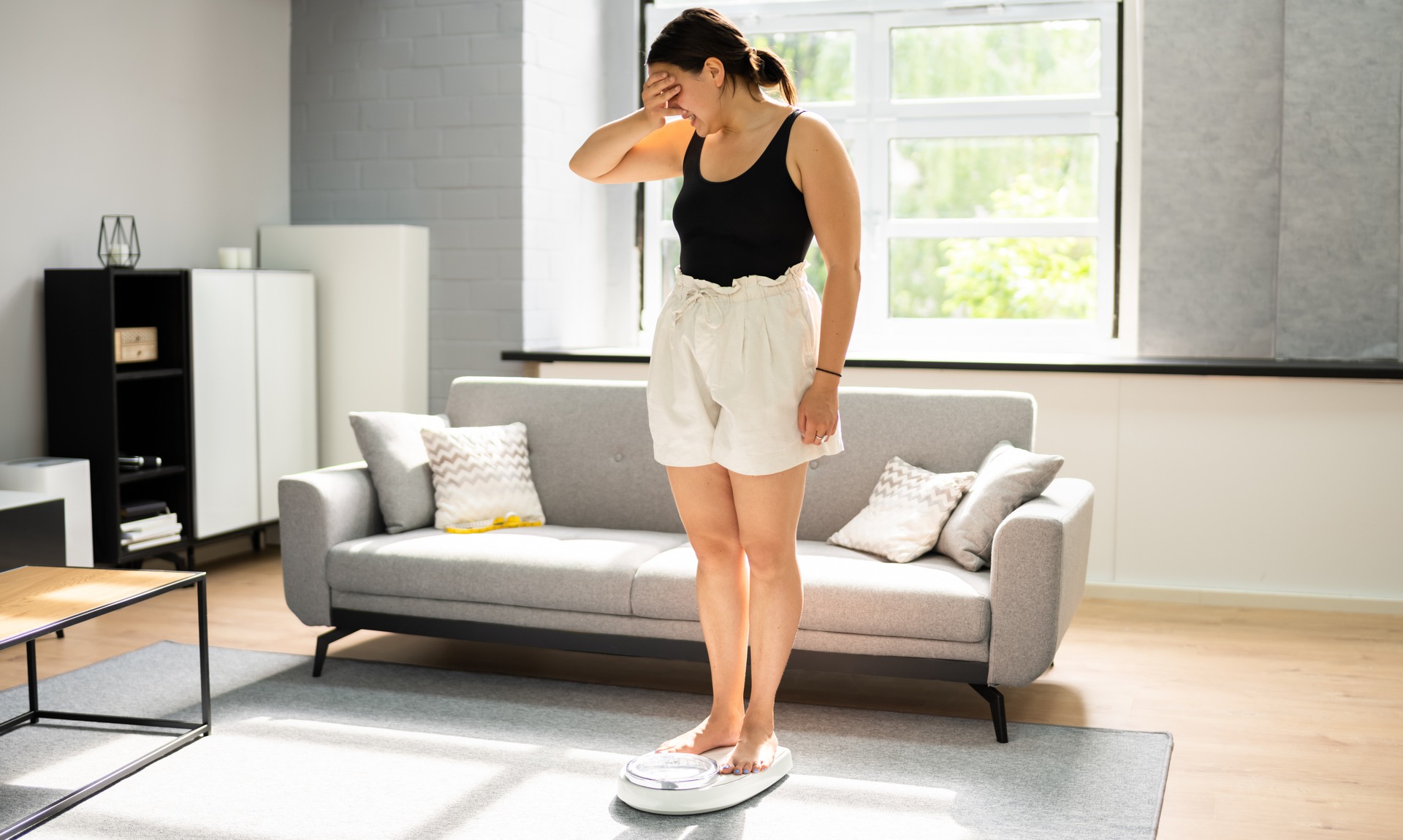
The key words here being ‘too much’. Of course, you need to actually want to lose weight, if you don’t care at all, you just won’t do anything. The problem lies in placing too much mental stress on losing weight.
This study in 2017 suggests that too much stress can lead to: poor sleep, increased appetite, cravings for unhealthful foods, reduced motivation to engage in physical activity. All of these factors can lead to weight gain or, more importantly, hamper weight loss efforts. Stress is something I’ve discussed many times before. I see it as the silent killer of cycling performance.
Top tips for caring less
To care less, we often just need to focus on relaxing. Here are my top tips for reducing stress, caring less, and general relaxation:
- Meditation
- Yoga or Pilates
- Breathing exercises
- Creating a new routine
- Learning to forgive
- Removing certain stress triggers
- Reducing caffeine, alcohol, and drug use
- Practising mindfulness or gratitude
- Talking to someone
- Helping others or volunteering
You don’t need to do all of these, just find one or two you like the sound of and commit to doing them daily.
Set point theory
There’s a theory called ‘Set Point Theory’ which suggests that you have a genetic weight that your body will aim to achieve, or return too should you go above or below it. How many stories have you read about people returning to a certain weight after dieting? Too many.
You might be thinking that surely your DNA doesn’t want you to be obese? Well it doesn’t. Sadly, you can slowly influence your ‘settled-weight’, eventually your body will settle into a new weight. It’s key to emphasise slowly here, it is not a process that works well in a short period of time.
While this theory might not have too much bearing on how you actually lose weight, it does help us understand how long term weight loss is actually achieved. A good guide is to aim to lose 10% of your body weight and then maintain it for at least six-months. Check out the 10% solution for more info.
Counting calories
Check your previous exercise (output) data across more than one platform, for example TrainingPeaks, Strava, Wahoo, or Garmin. Is your caloric expense the same? Nope. Why? Because there’s no really accurate way to measure this – too many variables, such as power meter accuracy.
Guess what? It’s even harder to estimate your calorific intake, thus making weight loss for cyclists more challenging…
While I know there are people who love numbers and find calorie counting highly useful, the majority will eventually become frustrated by fluctuating weight and energy levels. Counting calories might be very useful for the first couple of weeks of a new nutritional strategy – to check you have it right – but as a long term measurement, most people find it hinders more than it helps.

Eating ‘healthy’
Be careful trusting businesses that label food as being ‘healthy’. While there is a balance to be found here, if you are reading “healthy” on a label, you might already be eating the wrong foods. Stop buying food with a label and you will almost certainly, at some given duration, reach your desired weight. Less packaging is far better for the environment too.
Where to find the balance is your decision to make. Can you still lose weight and have the occasional take-out meal, pint of beer, or chocolate bar? Probably, but you might find better results with a little more self-discipline.
Summary
Lasting weight change is usually built through calmer, more consistent decisions rather than another short-term restriction. If you would like help making those decisions fit your training and lifestyle or you just want general help with weight loss for cyclists, Book a Free Consultation.