Last Updated on 17 September 2026:
Silence gives you an opportunity to sit with your thoughts, reflect on your training and check in with how your body and mind are feeling. Meditation for cyclists can be a simple, time-efficient way to build mental toughness, improve focus and better manage the thoughts that arise before and during a ride. During this time, you can start to understand and appreciate what is going on in your mind and throughout your body.
Covered in this blog
- The science of meditation for cyclists
- Flow and athletic performance
- Starting a meditation practice
- Example breathing technique
- Summary
The science of meditation for cyclists
Ever since I was introduced to meditation and mindfulness, I have been a huge advocate for its use in improving cycling performance.
Including some form of mental fitness training in your overall sports training is becoming increasingly popular. It’s available for free, it’s easy to get started, and it is time efficient. If you aren’t spending anytime in this area, you will no doubt see some significant improvements when you start.
While it is still an emerging field being scientifically studied, there have been numerous published and recognised papers that support meditation and mindfulness for athletes. One study conducted in 2017 found that:
“Increased dispositional mindfulness in competitive athletes (i.e. by practicing mindfulness) may lead to reductions in rumination {the focused attention on the symptoms of one’s distress}, as well as an improved capacity to regulate negative emotions. By doing so, athletes may improve their sport-related coping skills, and thereby enhance athletic performance.”
Another study in 2017 by Lorenza S. Colzato & Armin Kibele found that
“Long-term engagement in mindfulness meditation has been found to be effective in achieving optimal athletic performance through decreasing the level of anxiety, ruminative thinking, and enhancing the experience of flow.”
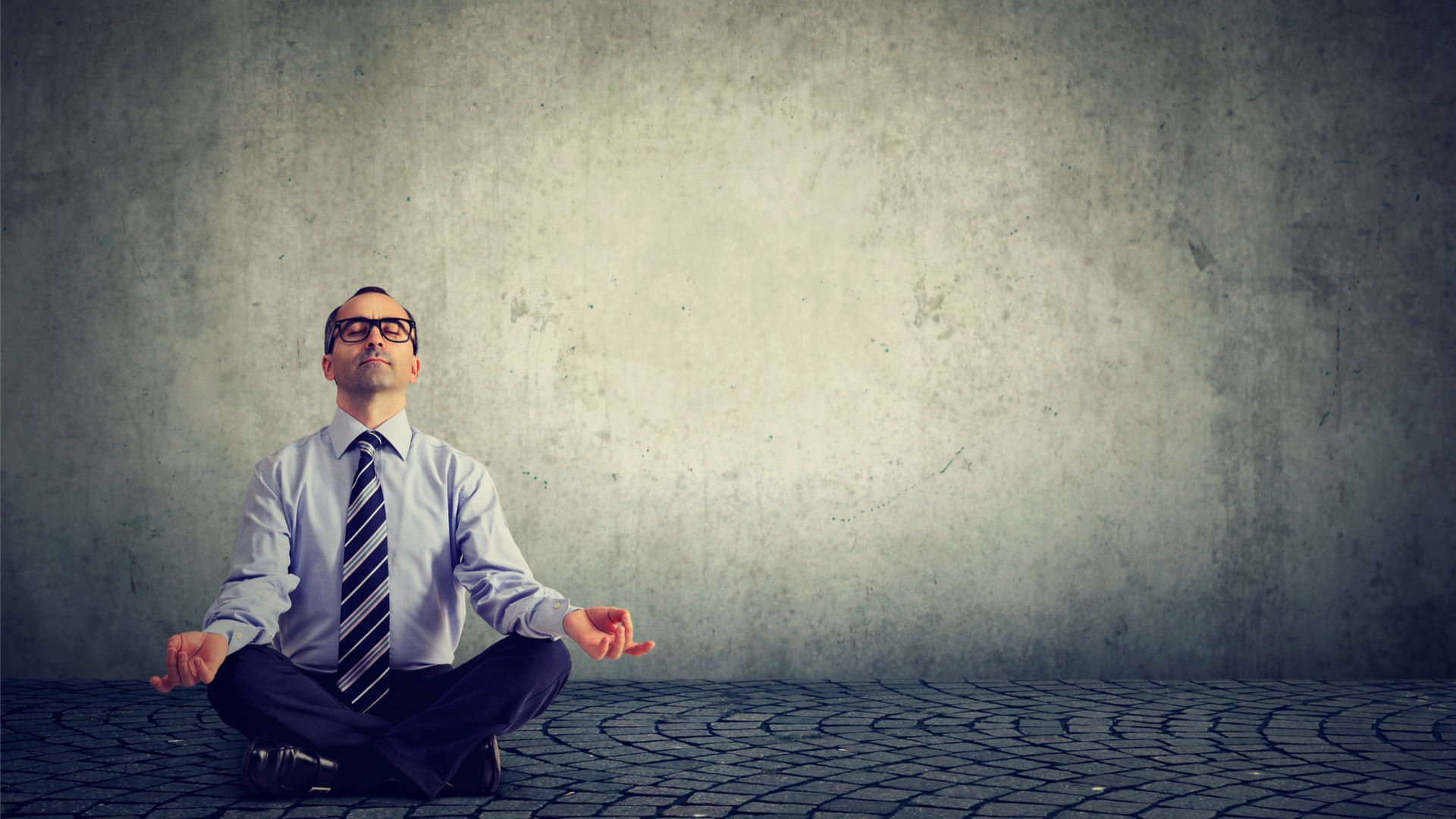
Flow in meditation for cyclists, and athletic performance
“A flow state, also known colloquially as being in the zone, is the mental state in which a person performing an activity is fully immersed in a feeling of energized focus, full involvement, and enjoyment in the process of the activity. In essence, flow is characterized by the complete absorption in what one does, and a resulting transformation in one’s sense of time.” Wikipedia.
You may already be familiar with it. You might remember a time, perhaps not even on the bike, when you were at one with the activity you were performing. You might have experienced euphoria or felt untouchable. Maybe you smashed several PB’s, took some KOM’s, or even rode faster than you’ve ever done before. This is flow; the point where peak cycling performance meets peak mental performance.
If you’ve not experienced it, you need to be goal focused and have significant intention before starting the activity (smash a 10 mile personal best for example) and focus on something rhythmic during the activity itself (your breathing or cadence for example).

Starting a meditation for cyclists practice
There are a number of ways you can be easily guided into starting a meditative practice. I love apps such as Headspace or Calm, but if you’re not wanting to spend any money just yet, you might try something like Balance, which is currently free for the first year. Start at any time of the day, but with the intention of starting your day with this in the longer term.
Meditation is about you, so there’s no problem if you want to practise sitting with crossed legs, on a chair, or even laying down. Just try to find somewhere quiet and peaceful where you won’t be disturbed for around 10 minutes.
Start with some breathing exercises; long deep breaths, maybe pausing at full inhale for a moment or two. If it helps, you could count to four on each part of the breath, four as you inhale, four pause with full lungs, four as you exhale and straight back into inhale again. Do this for some time until you feel more relaxed. If you are quite tense, imagine yourself letting go as you exhale, relaxing every muscle in your body.
Then you can sit quietly, allowing thoughts to come and go without any judgement. The idea is to be thoughtless, but in practice it is highly unlikely to be achieved when first starting meditating and, from personal experience, my bipolar brain rarely allows me any peace. As thoughts or feelings come and go, simply thank them and relax yourself back into meditation. You could label them thought or feeling and it might help to focus on the breath as you relax.
Example breathing technique
Here is another simple breathing technique to help you get into a meditative state:
- Sit or lie flat in a comfortable position
- Put your left hand on your stomach and your right hand on your heart
- Take a deep breath in through your nose, letting your stomach push your hand out
- Breathe out slowly through pursed lips as if you were whistling
- Do this just 3 to 10 times

Summary
Ten minutes of quiet practice each day is a simple place to start, and it may help you bring more awareness, calm and intention to your riding. If you would like support bringing mental fitness into your wider training, Book a Free Consultation.