
Last Updated on 17 September 2026:
From my many years as a coach, I have seen that cyclists in demanding executive or desk-based roles can struggle to commit to training, even when they are not physically active all day. The constant responsibility of making important decisions can leave less energy to get on the bike. Understanding decision fatigue cycling performance can help you plan training around the mental load of everyday life.
Covered in this blog
- The definition of decision fatigue
- How decision fatigue affects everyone
- Comparisons between decision and mental fatigue versus physical fatigue
- How decision fatigue affects cycling performance
- How to cope with decision fatigue as an endurance athlete
- How to reduce decision fatigue
- How to adapt to decision fatigue
- How to get help
Understanding decision fatigue for cycling performance
The Wikipedia definition of decision fatigue is:
“In decision making and psychology, decision fatigue refers to the deteriorating quality of decisions made by an individual after a long session of decision making. It is now understood as one of the causes of irrational trade-offs in decision making.”.
It goes beyond just making simple decisions. Here are some factors that can cause decision fatigue:
- Being hugely affected or affecting others by decisions you make
- The negative consequences of a previous decision you made such as having to fire someone, punish your kids, or end a relationship
- Even simply telling someone “no”
- Stressful or complex decisions
- Anything relating to money; budgeting, borrowing or lending money, talking to others about your financial situation
- Health care, choices involving loved ones, end of life decision making
I’m sure the previous list looks familiar, but perhaps a bit dramatic. While some of those are huge decisions that might contribute a massive amount of fatigue, albeit infrequently, there are a lot of very common decisions we all make that contribute cumulatively.
Here are some common decisions that contribute to decision fatigue:
- What to wear in the morning
- What to eat for breakfast/lunch/dinner/snacks
- What training to do today
- What time to exercise/train today
- Where to walk the dog today and how many times, or who is responsible for that
- What the kids will eat for breakfast
- Any decision relating to work
- What to watch on television
This list is literally infinite…

Comparisons between decision and mental fatigue versus physical fatigue
Funnily enough, they are actually quite similar. Symptoms of physical fatigue (with thanks to BetterHealth) can include:
- Chronic tiredness or sleepiness
- Headache
- Dizziness
- Sore or aching muscles
- Muscle weakness
- Slowed reflexes and responses
- Impaired decision-making and judgement
- Moodiness, such as irritability
With symptoms of decision or mental fatigue (with thanks to HelpGuide) including:
- Sense of failure and self-doubt
- Feeling helpless, trapped, and defeated
- Detachment, feeling alone in the world
- Loss of motivation
- Increasingly cynical and negative outlook
- Decreased satisfaction and sense of accomplishment
Very similar, very negative lists. I’m sure you’ll want to avoid these symptoms, especially if you are looking to be the best for your training.
Anecdotally, the main difference between the two might be that physical fatigue is easier to identify, while decision fatigue might tend to be more chronic and sneak up on us.
Ultimately, they have one thing in common and that is your cycling performance suffers when you are fatigued.
How decision fatigue affects cycling performance
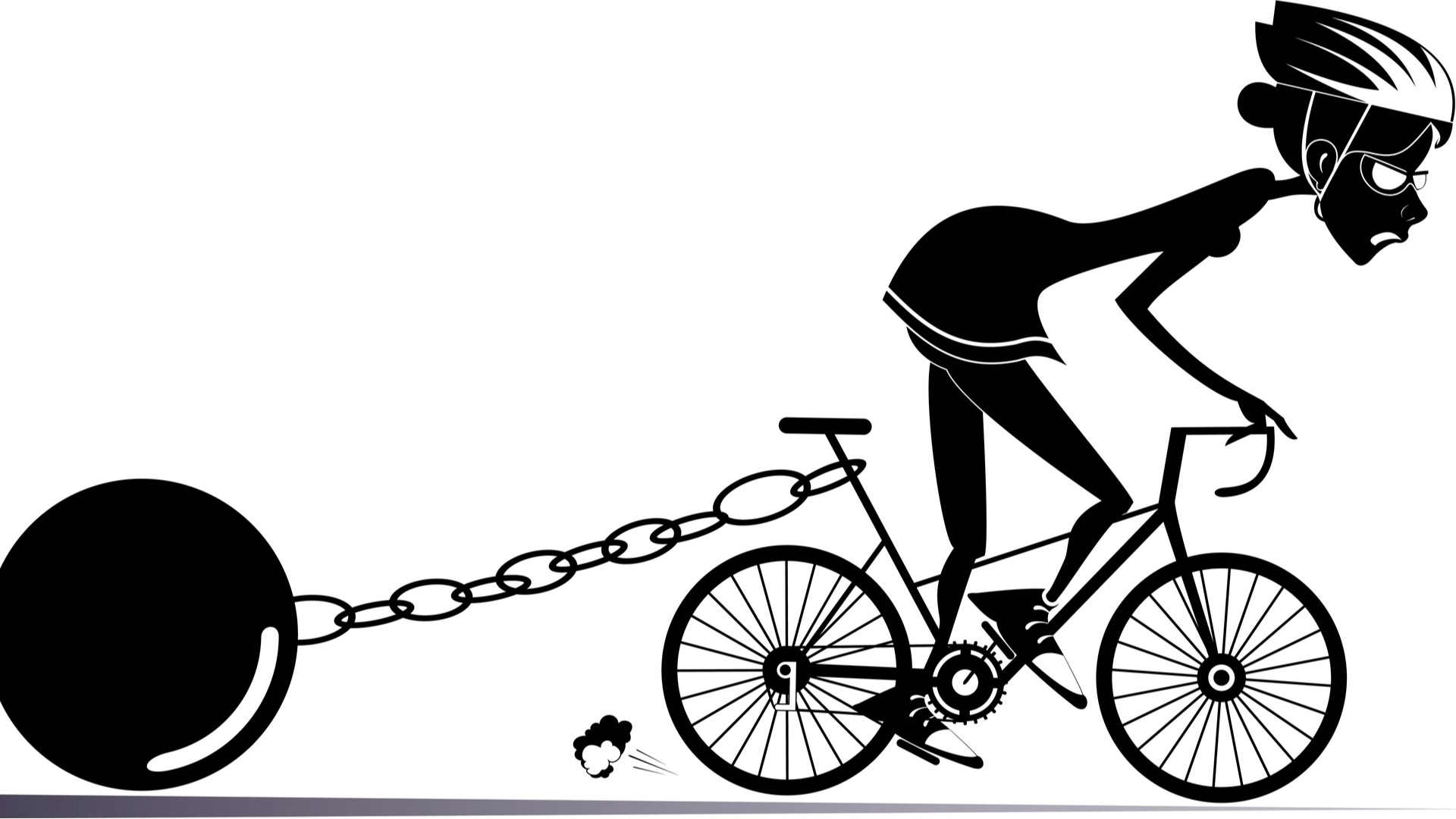
Unsurprisingly, decision fatigue affects your cycling performance negatively.
This study ‘The effects of mental fatigue on sport-related performance’ by Benjamin Pageaux and Romuald Lepers found that:
“…it appears that mental fatigue impairs endurance performance, motor skills performance and decision-making performance…These observations suggest that mental fatigue impairs sport-related performance during exercises performed at a submaximal intensity and not during exercises performed at maximal and supramaximal intensity. The negative impact of mental fatigue on submaximal exercises seems to be mediated by an increase in perception of effort.”
You had probably guessed it already, but if we want to maximise our performance, we need to be looking at decision fatigue in the same light as we do physical fatigue. As a coach, I look to reduce the amount of time my clients spend on additional non-training sources of physical load, and this is the same with their mental load too.
How to cope with decision fatigue to better your cycling performance
In order to ensure you are able to focus on training, give it your absolute all, and remain motivated when the times are tough, we need to ensure that you are coping with decision fatigue in your day-to-day life.
Thankfully, this is fairly easy and I have two main techniques which you can consider.

How to reduce decision fatigue
Firstly, and somewhat obviously, we can simply look to reduce the amount of decision fatigue you experience on a day-to-day basis.
1. Simplify everything
The little decisions might be the ones that really stack up, but you can simplify them even further. An example might be matching outfits once you’ve washed them – rather than having to pick a shirt, trousers, jumper, or jersey, shorts, socks when you are getting dressed – simply match them post-cleaning.
Another example might be what you eat. If you can’t simplify each meal, by meal prepping, so you eat the same thing daily, maybe meal delivery service is for you.
2. Delegate
This might be easier if you have people who work for you, but it can work in a family environment too if your children are at an age where they would benefit from increased responsibility.
If your kids are ready to start being more responsible for themselves, picking their own clothes or what they eat are great examples, give them that task will be great for you both.
If you don’t have employees or children, see if you can get help in your community, for example you might find a group of people who will share cooking loads – you cook once per week for everyone and take turns.
3. Limit your options
Reducing the amount of decisions you can make might be a game changer for you. This might look like donating a load of your wardrobe to charity so you have less clothes to pick from, or it could be buying the same clothes so you wear the same (but different) clothes every day.
Not having too much food in the fridge and pantry might limit your options for what to cook for dinner – and so on.
How to adapt to decision fatigue and improve your cycling performance
Secondly, and maybe less obviously, we need to learn to cope or adapt to decision fatigue.
1. Make simple decisions later in the day
Making the simple decisions later in the day, perhaps after you’ve trained, will help you avoid adding unwanted stress the next day. This might include what you are going to wear tomorrow, what you will eat, or what to do with the kids.
2. Make big decisions earlier in the day
Like doing a big training session later in the day when you are already fairly tired, you might be better off making your big decisions earlier.
This will be when you are most mentally fresh, and hopefully able to recover from it. Examples might be to do with budgeting and money, or choosing to have a difficult conversation with someone.
3. Time your training
We know that maximal training, such as strength training in the gym, isn’t affected by decision fatigue as much as endurance training, so the logic here would be to make attempts to do your bike work in the morning, when you are most fresher, and your strength work in the evening. Of course, this isn’t always possible, but worth considering.
4. Meditate
If you’re a regular reader of my blogs, or follow me on social media (@pavbryan), you will know just how highly I rate meditation and mindfulness practices. If you make one change following reading this, please make it introducing this training into your life! Give it time and properly commit to it, I guarantee it will change your life.
Summary
You do not need to eliminate every decision from your life, but simplifying what you can and planning training around demanding days can make consistency far more achievable. If you would like help making your training fit around your life, Book a Free Consultation.