Last Updated on 15 September 2026:
Cycling heat training can change how well you cope with hot rides, from your pacing and hydration to how quickly you recover afterwards. A sudden temperature rise, a trip abroad or a hot target event can expose gaps that cooler training does not reveal. These guidelines combine practical coaching experience and study to help you assess your response, prepare progressively and ride with greater awareness in the heat.
Covered in this really long blog post:
- The Hot Weather Training Methodology
- What is ‘Hot Sources of Heat’
- Basics of physiology and thermoregulation
- Acclimation
- Avoidance
- Consequences
- Preparation
- Research and development
- Self-assessment
- Monitoring effects
- Power meters and heart rate monitors
Sensors and cameras - Pre and post weight measurements
- Sweat testing
- Lactate tolerance testing
- Self-assessment testing
- Rate of perceived exertion
- Perceived thirst index
- Perceived heat index
- Perceived fatigue index
- Gastrointestinal distress index
- Subjective journaling
- Pacing, self-assessments – damage control reporting
- Recovery
- Fatigue – peripheral – central governor
- Power meters and heart rate monitors
- Putting this all together
Cycling heat training
Think of a time you have been for a ride in heat, maybe this was a trip abroad or a sudden change in temperature at home, maybe this was even your target event. Did you perform as well at that temperature as you had been while training? Were there any issues with hydrating or keeping cool? Perhaps you had to take longer to recover after? These are all real issues that I have experienced as both an athlete and a coach.
A chance meeting through social media, and then in person, between myself and Spruzza President and Inventor, David Carrozza, while I was visiting my then partner some 5000 miles away from my home, was what sparked my curiosity in thermodynamics. This led to the joint creation of this methodology and the protocol that built the training plan which has been tested by many athletes including professional cyclist Evan Huffman.
The goal of this hot weather training methodology is to:
- Increase awareness and appreciation for the effect hot weather has on training, racing and the body
- Explore both historical and innovative approaches to helping athletes train in the heat
- Help athletes to self-assess their individual heat tolerances, experiences as well as existing health conditions that impact heat tolerance
- Prepare athletes with the right steps and gear to maximize the experience and results when they can’t avoid the heat
This, and what follows, is designed to provide some basic, and some detailed, explanations on why beating the heat is smart no matter how tough you are. No matter what your summer riding goals are, having the ability to stay cooler improves the experience and the memory of it.
Whether you are training to compete on the World Tour, complete a Gran Fondo or simply to better yourself, we are going to help you accomplish this and you’ll look back on one your best hot summers yet.
What is ‘Hot Sources of Heat’?
Heat has a couple of funny traits. First it is very much like age, you are comfortable where you are at, when you have been there a while. Much like being in your age bracket, being in a constant temperature becomes the norm, and it is only when we move outside this that we experience distress. Heat is also like beauty; it can be ‘in the eyes of the beholder’. What is hot for one is cool for another. I can attest to this having spent thirty years in the UK where the average summer high is 25c or 77f, which always felt reasonably hot. When I moved to Sacramento in California, the temperature average that I had to deal with went to 32C+ or 90F+. Like all things training, I eventually adapted. Now UK highs feel cool and hot is 40C+ or 104F+.
Coaches hear this all the time, “the heat doesn’t bother me” which is a statement we certainly can’t argue with. Your experience and perception is valid and real to you. However, the fact that the heat doesn’t bother you is a different statement than ‘the heat doesn’t affect you’.
Heat affects us all. It’s really not something we can consciously control. That our body responds to heat is baked in the cake. It is somewhat analogous to saying “dehydration” or being “thirsty” doesn’t bother me. Again, maybe true but it does affect you.
Heat is the enemy of performance and endurance. During the summer months it surrounds you. As much as you try to avoid it and get used to it, the heat will catch up to you. Its effects can range from annoying and uncomfortable to fatal. Usually at a minimum it just takes away some of the inherent pleasure of riding your bike.
On a bright summer day your body is exposed to heat from three different sources and only one you can control:
- Confected heat from the road. Road surface temperatures can range from 46C/115F to 66C/150F+. Your body is only a few inches to a few feet away. You can bake on your bike
- Radiant heat from the sun, exposure to direct sunlight. Ultraviolet rays have an enormous effect on your perceived heat index. The same temp in the shade or in direct sunlight feels drastically different
- Heat generated from your working muscles. Obviously, this is the one source of heat you control, and it’s the first thing that drops when you’re exercising in the heat
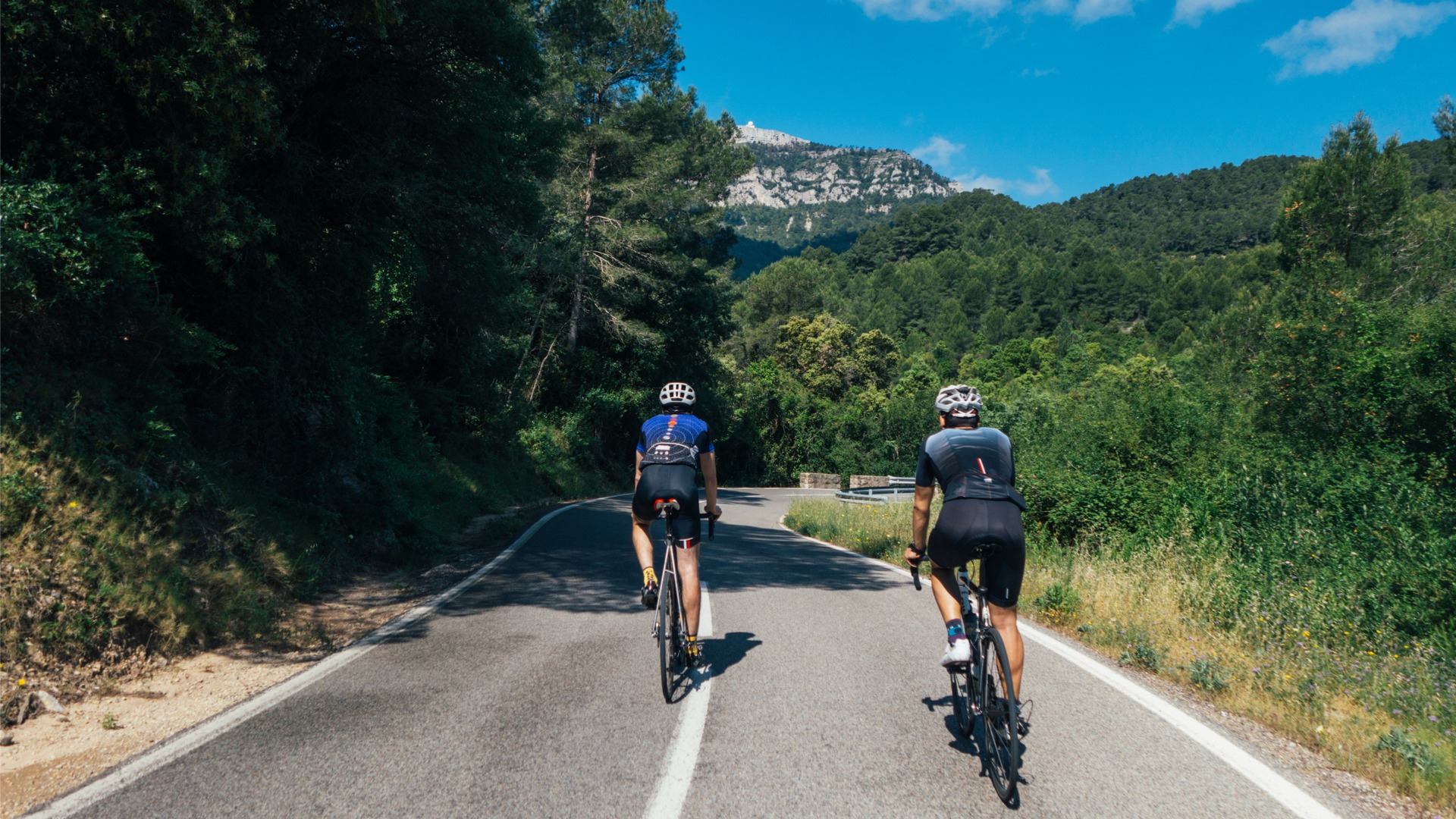
Cycling heat training, the basics of physiology and thermoregulation
Consider your car. You drive around in the heat and you have no problems at all. Now consider turning your air conditioning off. Your car will still get you to your destination, but the experience will be completely different. This is the key focal point of this hot weather methodology. You are your car, if you make no adjustments to deal with the heat, then your body might still get you there, but you will certainly feel different.
“The harder your body works to cool itself, the faster you fatigue”. David Carrozza
Remember that the less your body has to do, the more it can focus on cycling. Similar to riding on a full stomach or tensing your upper body too much, if your body’s thermoregulation is in overdrive, your cycling performance is being hindered.
The body’s way to deal with becoming too hot is sweating. Sweating is all about temperature control. When the body’s temperature rises, the eccrine sweat glands kick into gear to keep our body temperature stable. Once the body passes 98.6 degrees, the brain’s hypothalamus (the body’s thermostat) goes off, and no, it can’t just be turned down. This triggers the glands to release a salty mixture of water, sodium chloride, and other electrolytes. When sweat leaves the skin’s pores, it evaporates into the air, taking some heat with it.
What is your sweat made of? 99% of it is simply water, with the remaining 1% a mixture of urea, uric acid, lactic acid, ammonia, vitamin C, electrolytes, and more about 760 different skin proteins.
So, it makes sense that a particularly long or hot ride increases the body’s temperature and the need to start sweating. But, it’s not just body temperature that causes sweating. During exercise, heart rate and blood pressure increase, which in turn cause the body to pump out more sweat. Plus, repeated exercises, like an interval session, can turn on sweat glands even without soaring body temps. Even when blood pressure falls after time on the bike is up, the body often keeps churning out sweat because the muscles stay stimulated.
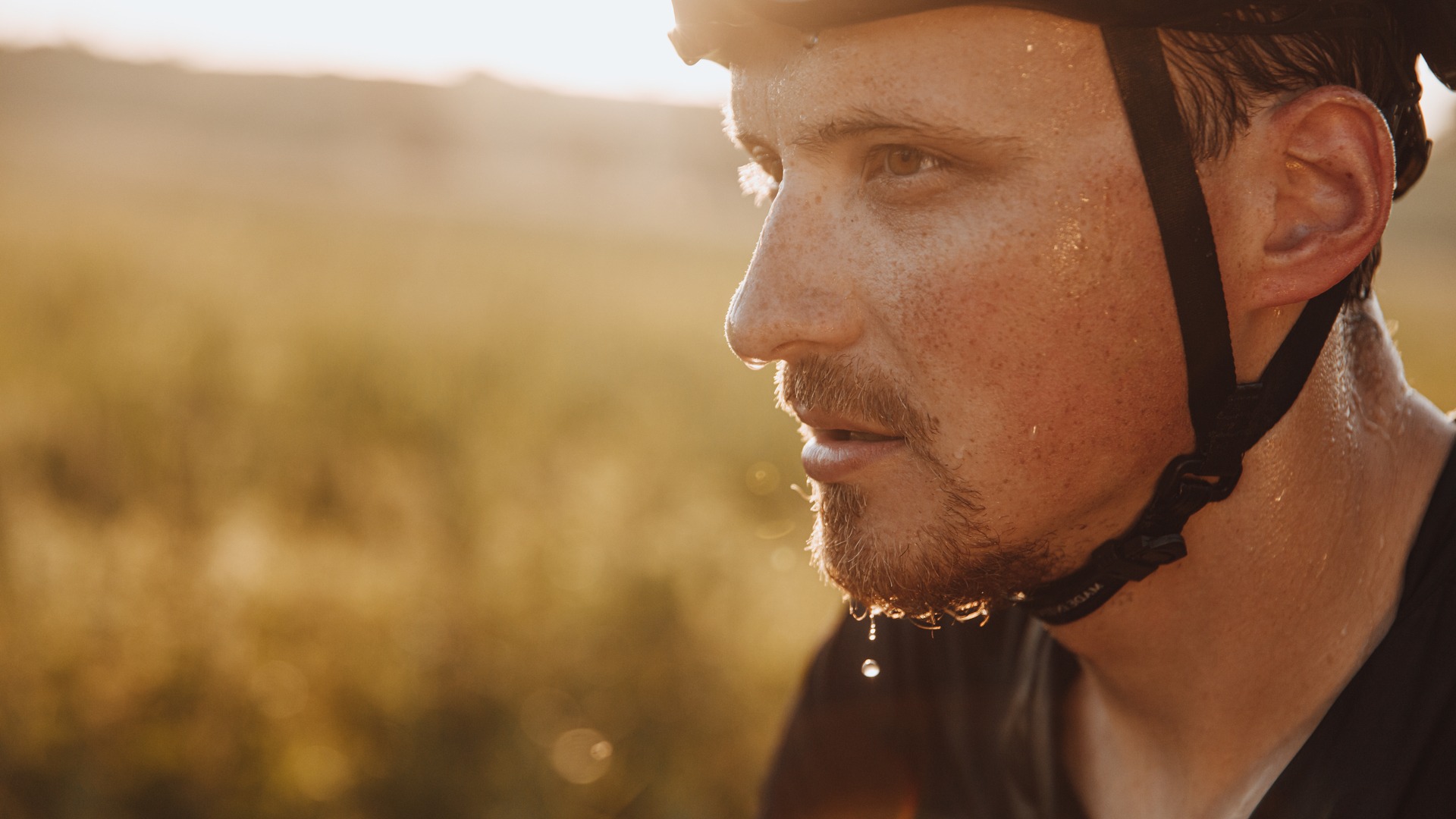
Acclimation
The principle goal of any training programme is to prepare, or acclimate, your body to the conditions and demands of the event you are partaking in. Of course, this has many features of components of fitness ranging from simply having the endurance to ride a bike for your target duration all the way to producing enough power on demand to win sprints, stage races, titles, medals, you name it.
What we are aiming to do here is add the well-known, yet little discussed, element of heat into the equation. In the same way that you might travel to altitude for a few weeks prior to an event at altitude so your body can adapt to the thinner air, we want you to be capable of performing well at your event in the heat.
We also understand that you might not have the means or opportunity to spend around 14 days, prior to your event, on location and so have developed the methodology to reproduce said adaptation either indoors or out, the latter being weather permitting.
“Heat acclimatization (or acclimation) confers biological adaptations that reduce physiological strain (e.g., heart rate and body temperature), improve comfort, improve exercise capacity and reduce the risks of serious heat illness during exposure to heat stress.
The biological adaptations include integrated thermoregulatory, cardiovascular, fluid-electrolyte, metabolic and molecular responses.
Heat acclimatization occurs when repeated exercise-heat exposures are sufficiently stressful to invoke profuse sweating and elevate whole-body temperatures.
Generally, about 1-2 weeks of ~90 min daily heat exposures are required; but highly aerobic fit athletes can heat acclimatize.” Key points from a Gatorade Sports Science Institute Study
In practice this might look like utilizing indoor sessions to improve sweat rate (or more accurately, the timing of your body’s sweating) and acclimating to heat, training to increase body temperature & then reducing heat during recovery periods.
Flatter rides outdoors; where power & speed can rise but the body might be capable of dispersing heat while there is sufficient wind. Interspersed with shorter hill reps; around half mile or 5% in gradient is ideal, where power can remain constant, or drop, but speed drops sufficiently for the wind to not produce the same cooling effect on our body temperature. Then, during the recovery interval, reduce temp as much as possible as well as heart rate to promote the body’s ability to cool itself at high temperature, even when temperature isn’t readily available.
Here’s the best factor about forcing this type of adaptation, it will make you stronger in cooler temperatures too. A study by the human physiology department at the University of Oregon found that athletes who trained in hotter temperature, for a mere ten sessions, experienced up to 8% improvements over a controlled group training in normal temperature. The tests were conducted at a cooler temperature.
“The cyclists who were heat acclimated performed anywhere from 4 to 8 percent better than they had before they trained in the heat, while the control group did not improve at all.”
If forcing your body to acclimate to the heat sounds too much at any point and you feel you might be better off simply precooling (such as ice packs) you might consider that a study, on runners, by the Environmental Extremes Laboratory at the University of Brighton found that, while precooling got the athletes an additional 4% in performance against ignoring the heat entirely, adapting to the heat got them a 6.5% improvement. What would you do for an additional 2.5%?
“(1) The biggest benefit of heat acclimation may be plasma volume expansion. Just as altitude stimulates your body to produce more red blood cells, heat stress stimulates your body to produce more plasma. The result is a greater cardiac output, and higher VO2 at a given effort level. In the New Zealand study, resting plasma volume increased by 4.5%, even though the athletes had very high plasma volume to start; in the Oregon study, plasma volume increased by 6.5%.
(2) One of the key signals that tells your body to adapt may be dehydration. So, if you do the heat acclimation but are super-careful to stay hydrated, you miss out on the benefits. In the New Zealand study, the athletes were allowed 100 mL of water during the 90-minute bouts — enough to stave off the feeling of being super-dehydrated, but not enough to stay hydrated. The benchmark some athletes are using: if you’re not at least 2% dehydrated, you drank too much; 3% is good; 4% is too much. (Note: this is just for the heat acclimation sessions, not a universal rule for all training sessions!)
(3) This approach can be combined with altitude. Spend a couple of weeks up high to boost red blood cells, then a week in the heat to boost plasma volume, then maybe 7-10 days in normal conditions and you’re ready to go.” Alex Hutchinson, Runners World
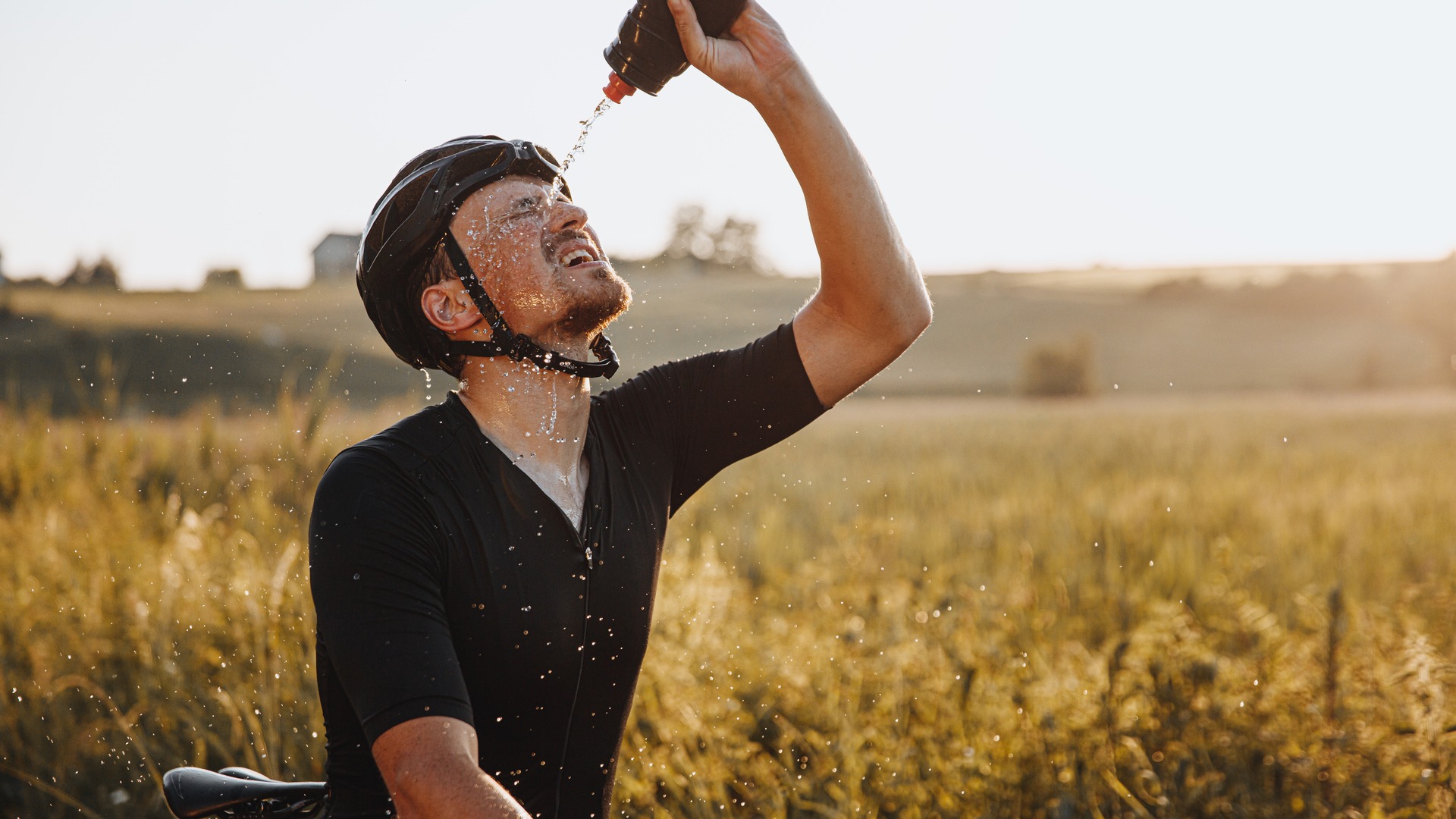
Avoidance
We want to ask you a couple of questions here, should you avoid the heat and what happens if your event is hot?
One of the biggest coaching practices for dealing with cycling heat training has been avoidance of it. Perhaps that has been training at a certain time of day, finding shady rides, or just training indoors. While this might help produce a better response in the body for certain adaptations, it might not help you if your main event is in hotter temperatures.
This type of tactic dramatically limits training ability and the consequences of this might not support your overall objective. We would define this type of behaviour as a ‘negative avoidance tactic’. Simply put, this is a damaging or limiting behaviour that helps you reach an immediate goal, in this case avoiding the heat, while damaging the chances of success at your overall goal, competing in the heat.
For those of us with busy lives, working, family and other commitments, planning to ride at a certain time of day might not be practical. We would argue that preparation for riding in the heat is better than avoidance, simple because you cannot always avoid the heat.
Aim to include more ‘positive avoidance tactics’. These might look like finding loops close to a base so you can train in the heat but take regular ‘cooling’ breaks. Much like interval training at high intensity, where the recovery part is riding at low intensity, this broken-down approach to dealing with heat stresses the body less, allowing faster recovery and in longer term, better adaptation.
‘Positive Tactics’ will also look like adding devices such as Spruzza to your setup and helping your body lower its temperature using an external cooling system or source of water, much like dumping your bottle on your head, but in a more accurate and productive method.
Consequences
We are choosing to focus more on the consequences of heat rather than the extremities of being too hot, i.e. heat stroke and so on. Here we look at a combination of factors that overheating leads to and what we are aware is necessary in order to function at a certain level in the heat.
Firstly, is hydration or fluid intake. We would look to measure your fluid expenditure via testing, this might look like how much fluid is lost over a series of tests to determine and plot a graph of what intensity, related to time/power/temperature, you start sweating and then what quantity that is. Once we have that benchmark, we can look to utilise training to either adjust that sweat threshold through training or attempt to find those ‘positive avoidance tactics’ which you can use on the day of your event, see Spruzza. Spruzza equals lower dehydration; the same cooling effect of sweating, using an external source of water.
“Performance losses of dehydration might look like up to 30% reduced capability”
Secondly, is electrolyte replacement; which primarily comes from sodium. Again, measurable but only via a specific sweat test, Precision Hydration can provide this. Many people sweat different rates of sodium, failure to replace sodium might result in hyponatremia or in some cases this is similar to having too much water in your blood. This can have effects similar to dehydration. Knowing the density of sodium that you lose in your sweat arms you with the information to rectify it.
“The Central Nervous System and skeletal muscle systems provide important sensory input to the conscious brain, and there is evidence that each can play a role in impairing aerobic exercise performance during heat and/or dehydration stress. However, the demands and limitations on blood flow implicate a much larger performance contribution by the cardiovascular system.” Journal of Applied Physiology, Vol. 109, No. 6, Mechanisms of aerobic performance impairment with heat stress and dehydration
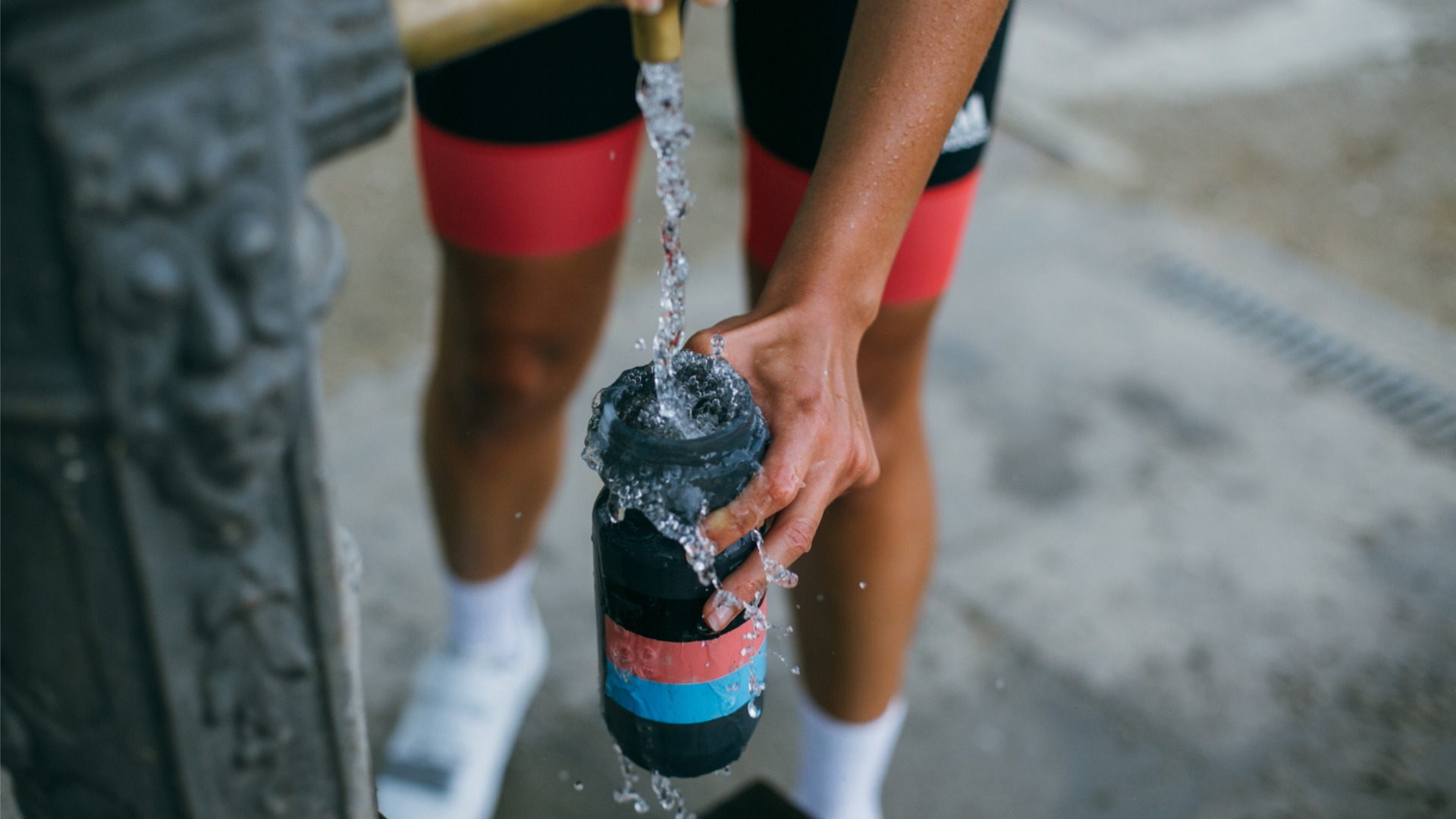
Preparation for cycling heat training
While there might be ideal timing points for certain parts of this protocol the earlier you get started with cycling heat training the better or more effective the results might be.
“Proper prior planning prevents piss poor performance” The Seven P’s, an old military adage
Weather is not a requirement to utilise this protocol, indoor training can produce more accurate and specific results using a series of sessions to improve your body’s sweat timing. Like mentioned at the beginning, the heat doesn’t go away, but your body becomes better at dealing with it.
Remember we don’t prepare for what is easy, we prepare for what is hard and extreme.
“Expect nothing, prepare for everything.”
The first steps to preparation start with self-assessment, a reflection on past experiences, challenges, successes and failures. How well have you performed in the heat before? Have you faced any specific challenges? What do you know about your training and racing that can be used to formulate a more effective programme for you?
Cycling heat training: Research & development
Insanity is described as “doing the same thing and expecting different results.”
This phase is largely educational, and it involves explaining to the client the underlying science and principles behind the proposed changes in mind. Immediately following this comes a period of readiness to change and more self-assessment on the part of the client to change past behaviours, test new approaches and tools for improving.
Planning is a big part of preparation especially when change is involved. A coach here is invaluable. A coach will know what steps toward change will be necessary. But you should know what the benchmarks for assessing progress are, when you will reconnect to evaluate the effects, positive or negative, and how or when you will make corrections or decide to ‘stay the course’.
Underlying preparation is the goal or goals for you and understanding the time and steps necessary for reaching them. It anticipates the time necessary for making midcourse correction accounting for adaptations along the way.
One of the strongest strategies you can add to your approach is to focus on eating healthily and treating your body well. An anti-inflammatory diet will help flush your body of free-radicals and increase the efficiency of all its systems including thermoregulation.
A diet rich in fresh, locally sourced and organic produce will support this and start to reduce and repair the damage done to your body, on a microscopic level, by harmful free-radical cells. These cells are formed through normal day-to-day life and are increased when you add training into the mix.
Self-assessment
Here we start with some information gathering. Among the necessary information you need to note down are key influencers such as history, current ability and goals. These will have a huge effect on just how you will personalise your plan.
In looking at your history, explore any recent riding achievements, milestones, knockbacks and experiences. Utilising tools such as TrainingPeaks, you can plot a graph of likely training growth from day one to the target goal or event. Where history indicates an experience which involves the heat, you will be able to pinpoint areas, specific to this package, which will need to be focused on.
In looking at your current ability, you are not necessarily looking at medical history, unless that is an issue, but an overview of both ‘self-reported’ training readiness and level of fitness. This may include where you live and ride, life circumstances and situations. A training diary, preferably hosted on TrainingPeaks, will provide enough background information on performance for you to make a start on tailoring your plan to your exact needs.
Some examples of health issues that predispose people to heat stress issues include MS, diabetics, women a few days ahead of their menstrual cycle, those suffering with low grade fevers and those taking certain medications.
“MS symptoms can become increasingly severe when there is an elevation in body temperature, with up to 80% of people with MS experiencing what is known as the Uhtoff’s Phenomenon. This phenomenon is characterised by the temporary worsening of symptoms when the core body temperature increases by 0.5 degrees Celsius or more.” MS Research Australia
Utilise a SMART approach to goal setting, go back over what you did in part one to see if you need to adapt anything. Are the targets being set Specific, Measurable, Attainable, Relevant and Time-Bound?
Armed with the information available you will be able to truly personalise your package to your exact needs.

Monitoring the effects of cycling heat training
To ensure that you have progression throughout this methodology we have devised a number of ways in which you can both monitor growth and help improve your body’s thermoregulation.
Power meters and heart rate monitors
Not only will you look to monitor your performance improvements to ensure your body continues to show positive adaptations, you might utilise methods in order to show that your body is coping better with the heat.
This might look like testing similar power outputs in extreme heat over a period of time to ensure that your heart rate doesn’t spike, or that on longer rides you can push back or eliminate the point your heart rate spikes due to heat exhaustion and dehydration.
Each test should be individualised for you and your goals.
Sensors and cameras
You might consider adding infra-red sensors (IR) or core measuring devices to check that your body is becoming thermodynamically efficient.
Again, using a similar testing protocol to that described above but this time focusing solely on whether parts of your body or core are remaining within the comfortable temperature boundaries for training and racing.
Pre and post weight measurements
Simple yet effective. Pre and post weighing of your body to determine exactly how much fluid was lost within a certain timescale. This is an effective way of measuring how much you will need to hydrate in order to complete your event.
Sweat testing
Precision Hydration has a couple of tests available to determine the amount of sweat lost in volume and then the quantity of sodium lost in that. The first is readily available online and although far less accurate will provide details about a recommended hydration and electrolyte supplement programme.
The second involves a non-invasive non-exercise test. Electrodes are placed onto the skin and a mild (so mild you can’t feel it) electric pulse stimulates your glands into sweating. The resulting liquid is then analysed to give you an exact measurement of sweat volume and sodium quantity.

Lactate tolerance testing
Lactate threshold (LT) testing can be utilised to determine an appropriate training intensity and monitor progression in athletes of all levels. This test is similar to the VO2 max test, although it consists of slightly longer periods of time between changes in workload. This test does involve several blood samples taken from the finger for the assessment of blood lactate. It is not considered a maximal test but does require a high-intensity effort.
Tied in with a similar additional protocol such as controlled heat we can see whether or not your lactate threshold is changing in response to an adaptation in your body’s thermoregulation.
Self-assessment testing
A key part of this protocol will be your self-assessment using semi-quantitative self-reporting forms to record improvements and adaptations all specific to when completing training.
RPE – Borg Scale
This is a scale of 1-10 (some start at a higher number and use 1-20, for this program we will use 1-10) where 1 is extremely easy and 10 is extremely hard.
PTI – Perceived Thirst Index
Again, we will use a scale of 1-10 where 1 is not thirsty at all and 10 is extremely thirsty.
PHI – Perceived Heat Index
1-10 where 1 is cool and 10 is extremely hot.
PFI – Perceived Fatigue Index
1-10 where 1 is no fatigue at all and 10 is extremely fatigued.
GIDI – Gastrointestinal Distress Index
1-10 where 1 is no distress at all and 10 is extreme distress.
Subjective journaling
Another key recording device for key performance indicators that will play a role in monitoring effects are subjective measurements. This is very similar to the above but is conducted every morning upon waking rather than as a reflection of training. This can be included on your TrainingPeaks calendar or any other diary/journal. Do this first thing upon waking, here are some measurements that indicate readiness to train:
- HRV – pulse monitoring
- Sleep quality (not necessarily quantity)
- Your thoughts on yesterday’s training (easy, hard etc.)
- Motivational levels (in relation to your next training session)
- Your perception of your physical condition
- Your perception of your mental energy
- Your perception of your muscle’s soreness
- Your perception of your level of fatigue
- Injury & sickness records
- Your current lifestyle (unstable & busy or routine)
- Whether or not you did excessive travelling yesterday
- Finally, anything else you feel relevant, notes on yesterday’s diet and any supplements you have taken
Pacing, self-assessments – damage control reporting
Self-assessing is largely educational. What we intend to do is raise your awareness of what to assess. If you’ve ever heard anyone say “cycling heat training doesn’t bother me” they might be unaware of what is happening in their bodies during extreme heat. There will be no dictating, just leading you to see and feel what is already there. We want you to feel that this works as a measure of its success.
To do this we will help you understand how intuitive reporting works. Simply put this is listening to your body and effectively reporting back what it is telling you. The previous chapter demonstrates the key performance indicators and their scales on which you will do this.
If you are unsure on how capable you are of self-assessing or you are somebody that routinely says “the heat doesn’t bother me” I would strongly suggest looking into meditation or mindfulness training. A simple and effective way to do this is to download the Headspace app and complete 10 minutes per day. Once you complete the first three foundation packs move onto another, the ‘Sport’ packs are excellent and the ‘Analysis’ pack very relevant to this topic.
Once you are more aware of what your body is telling you, you might develop a greater understanding of what your body feels like when it is working and when to take a break. It is better to take a break than to quit entirely. The bigger the relationship you have with your body’s own internal sensors the more accurate reflection your reporting will be. You will also find that pacing an effort becomes more reliable.
Not only will pacing be more effective but split testing will be too. A/B tests to validate your belief surrounding this methodology will help aspects to become more apparent. A simple example of this might be to follow what I did when first testing some of the features of the package out, including the Spruzza device. Head out on a ride, the first half hour using features of this package, then the second half hour without, ensure that the second half is equal to the first, power, HR, distance, speed and so on. After each section make a note of how you are feeling, what your perception is of the heat, the effort and your thirst.

Recovery from cycling heat training
Here we talk more about the day-to-day recovery and general wellbeing of an athlete who trains significantly hard or in long durations.
Have you ever been out for a ride and been ‘wiped-out’ for the rest of the day feeling lethargic, extreme fatigue, irritable or anything else? What about waking up the next day with similar feelings? Did any of this affect your day-to-day life, work, family or anything else?
You’d be a severe minority if you told me no to every one of the above questions! What we want to demonstrate is that with proper focus on recovery you can have a significantly positive impact in your daily life too. This is why we refer to this methodology as an ‘Ecosystem’ integrated approach to training.
After testing Spruzza for a couple of weeks during the summer of 2015, Evan Huffman’s first question was “You don’t want this back, do you?” Evan went on to state, “Using Spruzza in the heat, I’m able to train harder and recover faster. I’m definitely feeling less fatigued after a hot ride.”. At the time, Evan was riding for Rally Cycling and has taken the KOM jersey at the Amgen Tour of California in 2016, two stages of the Amgen in 2017, plus overall wins in the Tours of Alberta and Gila.
You don’t live in a vacuum with cycling being an independent, isolated activity. Training has to be integrated and coordinated with everything else in life. With correct usage of this methodology you can expect an increase in general wellbeing which might lead to you being a more productive person at work, more loving family member or simply a healthier person to be around. With less feeling of fatigue, physically and mentally, you should see dramatic improvements in the work/family/training balance, or as I determine, the holy grail of amateur cycling.
Fatigue – peripheral – central governor
When we talk about fatigue, we usually refer to simply our muscles getting tired, but there is another theory that might help us explain why we tire called the Central Governor.
“The central governor is a proposed process in the brain that regulates exercise in regard to a neurally calculated safe exertion by the body. In particular, physical activity is controlled so that its intensity cannot threaten the body’s homeostasis by causing anoxic damage to the heart muscle. The central governor limits exercise by reducing the neural recruitment of muscle fibres. This reduced recruitment causes the sensation of fatigue. The existence of a central governor was suggested to explain fatigue after prolonged strenuous exercise in long-distance running and other endurance sports, but its ideas could also apply to other causes of exertion-induced fatigue.
The existence of a central governor was proposed by Tim Noakes in 1997, but a similar idea was suggested in 1924 by Archibald Hill.
In contrast to this idea is the one that fatigue is due to peripheral ‘limitation’ or ‘catastrophe’. In this view, regulation by fatigue occurs as a consequence of a failure of homeostasis directly in muscles.” Wikipedia definition of Central Governor
Cycling heat training might also change the perception from the central governor point-of-view. A study by the University of Canberra Research Institute for Sport and Exercise, Bruce, ACT, Australia, found that there were significant decreases in mean power output in the middle and end sections of paced efforts when under heat stress. The same study showed that with the use of pre-cooling methods there were no significant changes. The study goes on to suggest that “negative feedback involving performance deception may afford an upward shift in MPO in the middle section of the trial improving overall performance. Finally, performance improvements can be retained when participants are informed of the deception.”
The power of the mind.
Summary
Start with manageable heat exposure, monitor how your body responds, and practise your cooling, hydration and pacing strategy before a hot ride or event. If you would like support tailoring the approach to your riding, Book a Free Consultation.